Logo of A&M Canadian Immigration law Corporation

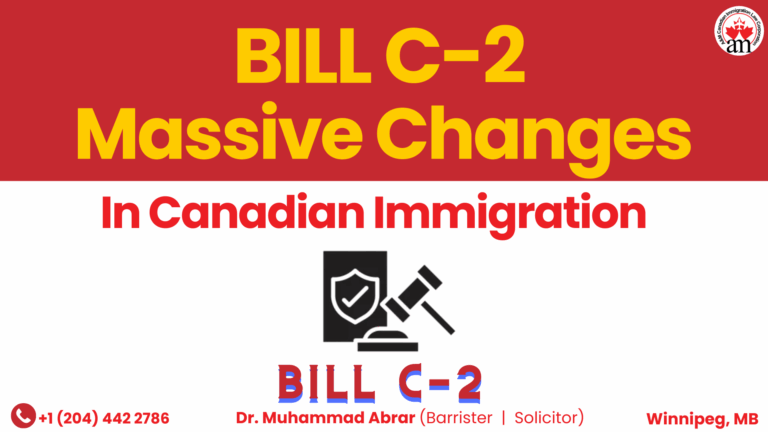
Bill C-12: A New Era in Canadian Immigration

Canada is on the verge of a significant shift in immigration policy with the introduction of Bill C-12, signaling what many experts describe as a tougher chapter in Canadian immigration history.

What is Bill C-12?

Bill C-12 is federal legislation designed to give the government expanded authority over permanent residence applications, work permits, and refugee claims. If passed into law, it represents a major change in how Canada manages immigration, potentially impacting thousands of applicants.

Key points include:

●       Authority to suspend, terminate, or refuse PR applications

●       Power to cancel or suspend active visas and work permits

●       Implementation of stricter refugee policies

Experts warn that this is not just another bill, it marks the beginning of a more restrictive era in Canadian immigration.

Legislative Progress

●       House of Commons: Bill C-12 passed all three readings on December 11, 2025

●       Senate: First reading completed; the next session is scheduled for February 3, 2026

In Canada’s federal system, it is rare for a bill that has passed the House of Commons to be defeated in the Senate. Once the Senate approves the bill’s third reading, it will proceed to Royal Assent, officially becoming law.

According to media reports and immigration researchers, Bill C-12 is expected to become law by spring 2026.

Canada previously used similar legislation in 2012, resulting in the cancellation of 280,000 Federal Skilled Worker applications submitted before 2008.

Bill C-12 is broader in scope, giving the federal government mass cancellation authority for active applications and permits, alongside the introduction of more restrictive policies for refugees and PR pathways.

What This Means for Immigration Applicants

●       PR applicants may face stricter scrutiny and longer processing times

●       Active visa and work permit holders could experience unexpected cancellations or suspensions

●       Refugee applicants should prepare for tighter policy enforcement

●       Overall, Canada’s immigration system may become more selective and restrictive in 2026

Applicants and employers should monitor developments closely and seek professional guidance to navigate this evolving landscape.

Bill C-12 signals a new era in Canadian immigration. With expanded government authority over PR applications, visas, and refugee claims, 2026 is shaping up to be a year of heightened scrutiny and tighter immigration rules.

At A&M Canadian Immigration Law Corporation, we provide expert guidance on policy changes, PR applications, and compliance with new legislation. Our team helps clients navigate evolving laws like Bill C-12, ensuring strategic planning to protect permanent residence and work permit opportunities.

Visit our Social Media:

CATEGORIES

Case Law Library (949)Case Law Update - January 2026 (13)Case Law Update - February 2026 (9)Case Law Update - March 2026 (12)Case Law Update - April 2026 (9)Case Law Update - May 2018 (4)Case Law Update - May 2019 (3)Case Law Update - May 2020 (4)Case Law Update - May 2021 (6)Case Law Update - May 2022 (10)Case Law Update - May 2023 (10)Case Law Update - May 2024 (13)Case Law Update - May 2026 (10)Case Law Update – May 2025 (18)Case Law Update - June 2026 (24)Case Law Update - Apr. 2018 (7)Case Law Update - Apr. 2019 (6)Case Law Update - Apr. 2020 (8)Case Law Update - Apr. 2022 (11)Case Law Update - Apr. 2023 (11)Case Law Update - Apr. 2024 (14)Case Law Update - Aug. 2018 (5)Case Law Update - Aug. 2019 (4)Case Law Update - Aug. 2020 (5)Case Law Update - Aug. 2021 (8)Case Law Update - Aug. 2022 (7)Case Law Update - Aug. 2023 (10)Case Law Update - Aug. 2024 (7)Case Law Update - Aug. 2026 (8)Case Law Update - Dec. 2018 (7)Case Law Update - Dec. 2020 (5)Case Law Update - Dec. 2021 (9)Case Law Update - Dec. 2023 (6)Case Law Update - Dec. 2024 (15)Case Law Update - Dec. 2025 (11)Case Law Update - Feb. 2018 (8)Case Law Update - Feb. 2019 (6)Case Law Update - Feb. 2020 (7)Case Law Update - Feb. 2021 (3)Case Law Update - Feb. 2022 (11)Case Law Update - Feb. 2023 (14)Case Law Update - Feb. 2024 (16)Case Law Update - Jan. 2018 (8)Case Law Update - Jan. 2019 (6)Case Law Update - Jan. 2020 (11)Case Law Update - Jan. 2021 (3)Case Law Update - Jan. 2022 (7)Case Law Update - Jan. 2023 (9)Case Law Update - Jan. 2024 (13)Case Law Update - Jul. 2018 (8)Case Law Update - Jul. 2019 (7)Case Law Update - Jul. 2020 (4)Case Law Update - Jul. 2021 (9)Case Law Update - Jul. 2022 (7)Case Law Update - Jul. 2023 (11)Case Law Update - Jul. 2024 (16)Case Law Update - Jul. 2025 (16)Case Law Update - Jul. 2026 (13)Case Law Update - Jun. 2018 (6)Case Law Update - Jun. 2019 (6)Case Law Update - Jun. 2020 (4)Case Law Update - Jun. 2021 (14)Case Law Update - Jun. 2022 (9)Case Law Update - Jun. 2023 (10)Case Law Update - Jun. 2024 (16)Case Law Update - Jun. 2025 (9)Case Law Update - Mar. 2018 (9)Case Law Update - Mar. 2019 (8)Case Law Update - Mar. 2020 (9)Case Law Update - Mar. 2021 (2)Case Law Update - Mar. 2022 (10)Case Law Update - Mar. 2023 (11)Case Law Update - Mar. 2024 (15)Case Law Update - Nov. 2018 (5)Case Law Update - Nov. 2020 (2)Case Law Update - Nov. 2021 (11)Case Law Update - Nov. 2023 (12)Case Law Update - Nov. 2024 (14)Case Law Update - Nov. 2025 (11)Case Law Update - Oct. 2018 (8)Case Law Update - Oct. 2020 (1)Case Law Update - Oct. 2021 (10)Case Law Update - Oct. 2023 (10)Case Law Update - Oct. 2024 (16)Case Law Update - Oct. 2025 (13)Case Law Update - Sep. 2018 (5)Case Law Update - Sep. 2019 (7)Case Law Update - Sep. 2020 (3)Case Law Update - Sep. 2021 (10)Case Law Update - Sep. 2022 (10)Case Law Update - Sep. 2023 (6)Case Law Update - Sep. 2024 (15)Case Law Update - Sep. 2025 (17)Case Law Update - Sep. 2026 (13)Case Law Update – Apr. 2021 (4)Case Law Update – Apr. 2025 (9)Case Law Update – Aug. 2025 (8)Case Law Update – Dec. 2022 (10)Case Law Update – Feb. 2025 (8)Case Law Update – Jan. 2025 (17)Case Law Update – Mar. 2025 (17)Case Law Update – Nov. 2022 (11)Case Law Update – Oct. 2022 (6)

About The Author

Picture of Dr. Muhammad Abrar

Dr. Muhammad Abrar

Barrister & Solicitor

From temporary status to PR, get expert legal help to choose the right immigration pathway.

Contact our office for details. Our immigration legal service in Winnipeg will assess your eligibility per CIC criteria and submit your application.