Spousal sponsorship is one of the most common pathways to
permanent residence in Canada. If you’re applying from within Canada,
understanding each stage of the process can help you stay prepared and avoid
unnecessary stress.
In this guide, we walk you through the step-by-step roadmap
of an inland (inside Canada) spousal sponsorship application, so you know
exactly what to expect.0
Understanding Inland Spousal Sponsorship
There are two types of spousal sponsorship applications:
inside Canada (inland) and outside Canada (outland). This article focuses
specifically on inland applications, where the sponsored spouse or partner is
already living in Canada during the process.
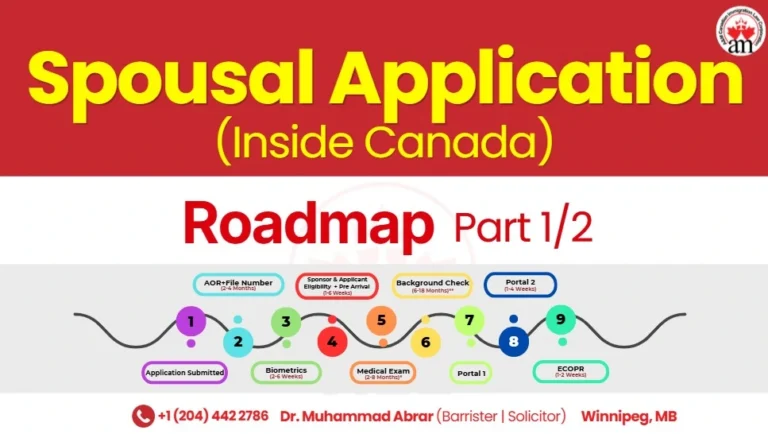
Step 1: Application Submission
Your journey begins once your application is successfully
submitted to Immigration, Refugees and Citizenship Canada (IRCC). This includes
all required forms, supporting documents, and fees.
Step 2: Acknowledgment of Receipt (AOR)
& File Number
Within approximately 2 to 4 months, IRCC will issue your
Acknowledgment of Receipt (AOR). This confirms your application has been
received and provides your file number.
At this stage, many applicants become eligible to apply for
a Spousal Open Work Permit, allowing them to work while their application is
being processed.
Step 3: Biometrics
Typically within 2 to 6 weeks after AOR, you will receive a
request to provide biometrics. This involves submitting fingerprints and a
photograph for identity verification.
Step 4: Eligibility Review
During this phase, immigration officers assess:
● The sponsor’s
eligibility
● The principal
applicant’s eligibility
This step usually takes between 1 to 6 weeks, depending on
the specifics of the case.
Step 5: Medical Examination
Applicants are required to complete a medical exam to meet
Canada’s health requirements. The timing of this request can vary
significantly, typically occurring between 2 to 8 months after submission. In
some cases, it may happen before or after the eligibility review.
Step 6: Background Check
This is often the longest and most unpredictable stage of
the process. IRCC conducts detailed checks related to:
● Security
● Criminality
● Background history
The duration of this stage varies widely depending on
individual circumstances.
Step 7: Portal 1 (PR Confirmation
Initiation)
Once your application is approved, you will receive the
Portal 1 email. This step is used to confirm that you are physically present in
Canada and ready to proceed with permanent residence confirmation.
Step 8: Portal 2 (PR Portal Submission)
After confirming your presence, you will receive access to
Portal 2. Here, you will be asked to submit your photo and current address for
your Permanent Resident (PR) card processing.
Step 9: eCOPR (Electronic Confirmation of
Permanent Residence)
Within 1 to 2 weeks after submitting your details in Portal
2, you will receive your electronic Confirmation of Permanent Residence
(eCOPR). This document officially confirms your status as a Permanent Resident
of Canada.
Currently, inland spousal sponsorship applications have an
estimated processing time of approximately 24 months, according to official
data. However, timelines can vary depending on the complexity of the case and
application volume.
The inland spousal sponsorship process involves multiple
stages, each with its own requirements and timelines. While the waiting period
can be long, understanding the process helps you stay informed and prepared at
every step.
Ensuring that your application is complete and accurate from
the beginning can significantly reduce the risk of delays or complications.
If you want to avoid delays or mistakes in your spousal
sponsorship application, it’s important to get it right from the start.
Professional guidance can make a meaningful difference throughout the process.
Reach out to A&M Canadian Immigration Law
Corporation to ensure your application is handled with care and precision.