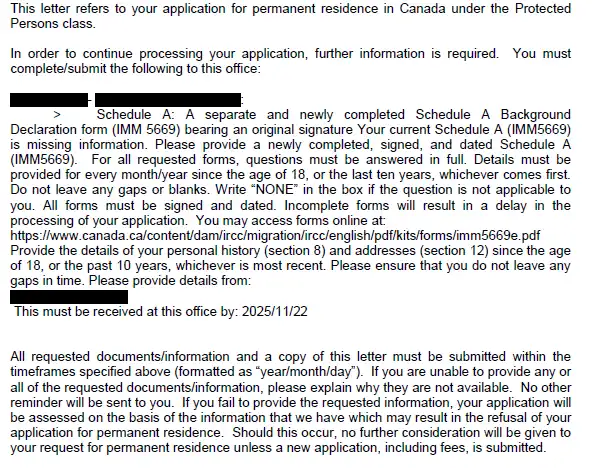
IRCC Request for Missing Background Information
Immigration, Refugees and Citizenship Canada (IRCC) may send
a request letter when an application contains missing, incomplete, or
inconsistent background information. This may include gaps in employment,
education, travel, address history, or other activities.
One common issue is that applicants leave out periods when
they were not working. If an applicant was unemployed, that period should still
be listed as “unemployed” rather than left blank. The same applies to
periods spent studying, travelling, staying at home, or doing another activity.
IRCC expects the timeline to be continuous and may ask for clarification when
dates do not line up.
Even a very short gap can create questions if one activity
ends and the next begins later. When IRCC compares information across the file,
even a small inconsistency can make the timeline appear incomplete.
IRCC also uses digital tools, automation, and artificial
intelligence to assist with application processing. These systems can help
check completeness, compare information, identify inconsistencies, and flag
files that may require further review. They do not independently make refusal
decisions, but they can make missing or conflicting information easier to
detect.
Applicants should therefore account for every period of time
and make sure dates are complete, accurate, and consistent throughout the
application. Intentionally hiding important information can raise concerns
about misrepresentation and may lead to serious immigration consequences.
Frequently
Asked Questions
1. Why might IRCC request additional
background information?
IRCC may request additional information when it identifies
missing dates, unexplained gaps, incomplete addresses, employment details, or
other information that requires clarification.
2. What does IRCC mean by a gap in personal
history?
A gap is a period of time that has not been accounted for in
the information provided.
For example, if an applicant’s employment history ends in
June and the next activity begins in September, IRCC may require information
explaining what the applicant was doing during July and August.
3. Can even a small gap of 1 day in my
history cause a problem?
Yes. Even a short unexplained gap may lead to questions if
the timeline is not continuous or if dates conflict with information elsewhere
in the application.
4.
What happens if I leave out or hide information?
An accidental omission may result in a request for
clarification or updated information. Intentionally hiding important
information or providing false details may raise concerns about
misrepresentation and can lead to serious immigration consequences, including
refusal.
To discuss more about responding to an IRCC request for
missing background information on a spousal sponsorship application , book your appointment with a Canadian immigration
lawyer at now.
Disclaimer: This article is provided for general informational purposes only and does not constitute legal advice.
Written by: Dr. Muhammad Abrar (Barrister and Solicitor)
Source: MPNP Official Website
Author |
Writer | Mentor | Legal Researcher | Canadian
Immigration Case Law and Statistics
Analyst