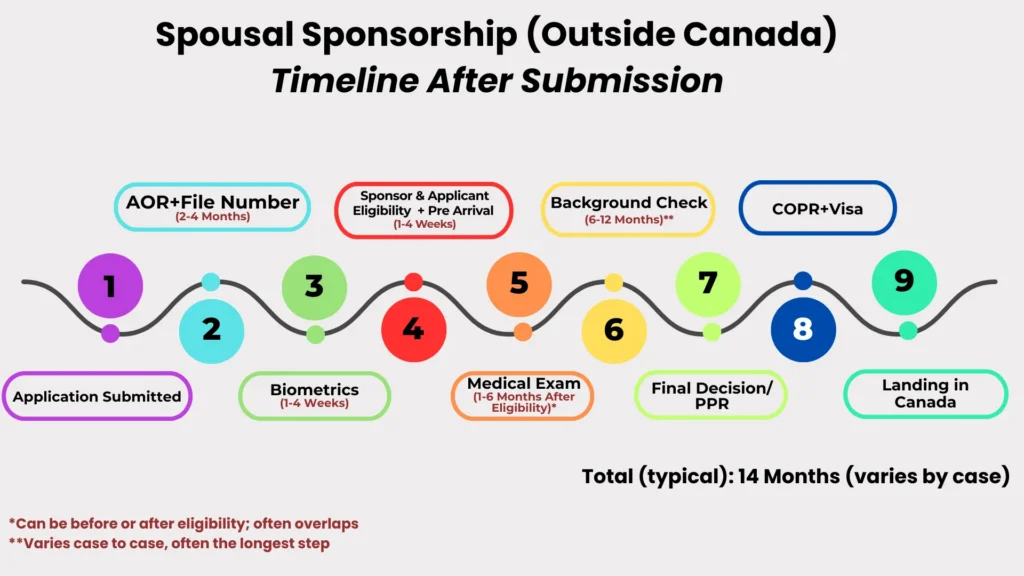
If you are sponsoring your
spouse or partner who is living outside Canada, understanding the overseas
spousal sponsorship process is essential. Knowing what happens at each stage
can help you prepare for requests from Immigration, Refugees and Citizenship
Canada (IRCC) and reduce the risk of unnecessary delays.
Outland Spousal Sponsorship
allows Canadian citizens and permanent residents to sponsor their spouse or
common-law partner who is residing outside Canada.
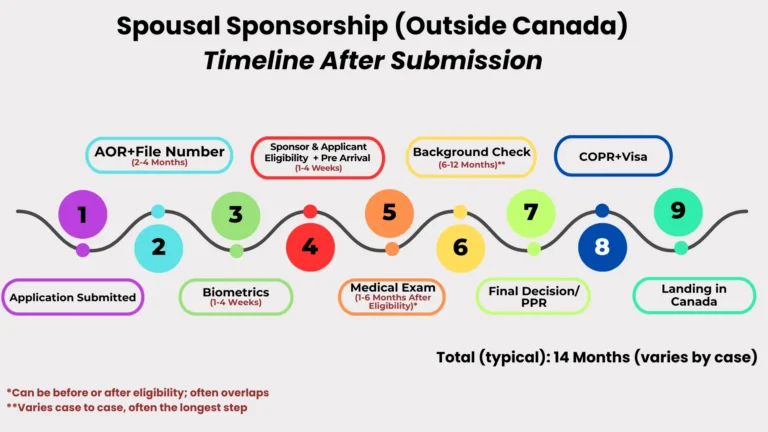
Step 1: Application
Submission
The process officially
begins once the sponsorship and permanent residence application is successfully
submitted to IRCC. Ensuring that all forms, supporting documents, and
relationship evidence are complete from the outset can help prevent delays
later in the process.
Step 2: Acknowledgment of
Receipt (AOR)
Typically within 2 to 4
months, IR1CC issues an Acknowledgment of Receipt (AOR), confirming that the
application has been received and entered into the immigration system.
The AOR includes the
application file number, which can be used to track the progress of the case.
Step 3: Biometrics
Request
In most cases, applicants
receive biometric instructions within 1 to 4 weeks after file creation.
Biometrics include
fingerprints and a photograph, which are used to verify identity and support
security screening.
Applicants must complete
biometrics at an authorized collection centre as instructed by IRCC.
Step 4: Eligibility
Review
During this stage,
immigration officers assess:
- The sponsor’s eligibility to sponsor
- The genuineness of the relationship
- Whether the application meets program
requirements
This review generally takes
approximately 1 to 4 weeks, although processing times may vary depending on the
complexity of the file.
Strong relationship evidence
can play a critical role during this stage.
Step 5: Medical
Examination
Applicants are typically
asked to complete an immigration medical examination once eligibility review is
underway or completed.
Medical instructions are
commonly issued within 1 to 6 months after application submission.
The examination must be
completed by an IRCC-approved panel physician.
Step 6: Security and
Background Screening
The background screening
phase is often the longest part of the process.
During this stage, IRCC
conducts detailed reviews related to:
- Criminality
- Security concerns
- Immigration history
- Background verification
Depending on the applicant’s
circumstances, travel history, and country of residence, this stage can take
anywhere from 6 to 12 months or longer.
Step 7: Final Decision
and Passport Request (PPR)
Once all assessments have
been completed successfully, IRCC will make a final decision on the
application.
If approved, applicants will
generally receive a Passport Request (PPR), asking them to submit their
passport or passport information for visa issuance.
Step 8: Confirmation of
Permanent Residence (COPR) and Visa Issuance
After the passport
submission process is completed, applicants receive:
- Confirmation of Permanent Residence (COPR)
- Permanent Resident Visa (if required)
The visa is generally issued
as a single-entry visa that allows the applicant to travel to Canada and
complete their permanent residence landing.
Step 9: Arrive in Canada
and Become a Permanent Resident
The final stage is
travelling to Canada.
Upon arrival at a Canadian
port of entry, an immigration officer will review the applicant’s documents and
finalize the permanent residence process.
Once admitted, the sponsored
spouse officially becomes a Permanent Resident of Canada.
Current Processing Time
for Outland Spousal Sponsorship
According to current IRCC
processing information, overseas spousal sponsorship applications are taking
approximately 15 months to process. Actual processing times may vary depending
on application volume, visa office workload, background checks, and individual
circumstances.
Common Reasons for Delays
Many spousal sponsorship
applications encounter delays because of:
- Incomplete application forms
- Insufficient proof of relationship
- Missing supporting documents
- Requests for additional information
- Extended security or background checks
- Inconsistencies in application information
A well-prepared application
can significantly reduce the likelihood of complications and processing delays.
Spousal sponsorship
applications are receiving increased scrutiny from immigration authorities,
making proper preparation more important than ever.
At A&M Canadian
Immigration Law Corporation, we assist sponsors and applicants in preparing
complete, well-documented applications that accurately demonstrate the
genuineness of their relationship and compliance with immigration requirements.
Whether your spouse is
overseas or already in Canada, our team can help you navigate the sponsorship
process and avoid common mistakes that may delay your application.
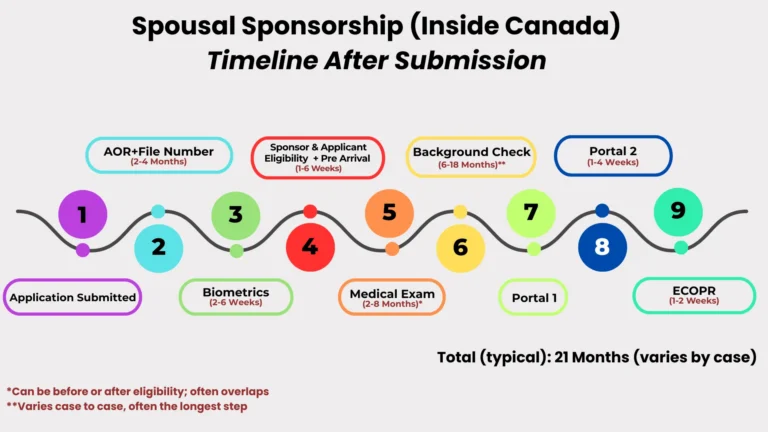
For applicants already living in Canada, be sure to read our complete guide on the Inland Spousal Sponsorship Application Roadmap.
Written by:
Dr. Muhammad
Abrar (Barrister and
Solicitor)
Author | Writer | Mentor | Legal Researcher | Canadian Immigration Case Law and
Statistics Analyst