MPNP PFL: Providing False, Inaccurate or Misleading Information
Why Accurate Information Matters
Providing genuine and accurate information is one of the most important obligations of an MPNP applicant. Concerns may arise when information submitted during the nomination process is found to be inaccurate, inconsistent, misleading or unsupported by genuine documents.
For example, an applicant may submit an employment reference letter containing responsibilities they never performed, provide inaccurate employment dates, or fail to disclose important information about their employment or personal circumstances.
Other situations may include, but are not limited to:
- Claiming work experience that was never performed, or that was performed in a different occupation or at a different skill level than stated.
- Submitting pay stubs, T4s or bank records that do not match the wages stated in the application.
- Providing employment dates that are inaccurate or that overlap with other work.
- Submitting language test results, education credentials or other documents that have been altered.
- Arranging payment of employer compliance fees through a consultant without informing or obtaining authorization from the employer.
The MPNP may conduct verification with employers, issuing authorities and other relevant sources to establish whether the information and documents submitted are genuine. This can include telephone verification. An MPNP officer may call the employer listed in your application, or the contact number on your employment documents, to confirm details such as your job title, duties, start date, hours of work, wages and the length of your employment. Officers may also contact you directly by phone to ask about your work, settlement plans or the contents of your application.
Calls may be made without advance notice, so both you and your employer should be familiar with the information in the application and be able to answer consistently. Any mismatch between what is said on the call and what is in your documents can raise concerns about the genuineness of the application and may lead to further inquiries or a refusal.
Under its Truthful and Correct Information Policy, the MPNP may refuse or reject an application, withdraw a nomination or impose a two-year restriction on submitting another application where misrepresentation is established.
Applicants and nominees should ensure that all information and supporting documents submitted to the MPNP and IRCC are genuine, accurate and consistent. If there are any unintentional errors or inconsistencies, applicants should correct them through the webform as soon as they are identified.
An applicant should never assume that information submitted during the original application will not be examined again after nomination. The MPNP may review previously submitted information and investigate concerns even after a nomination has been issued.
How to Respond to a Misrepresentation PFL
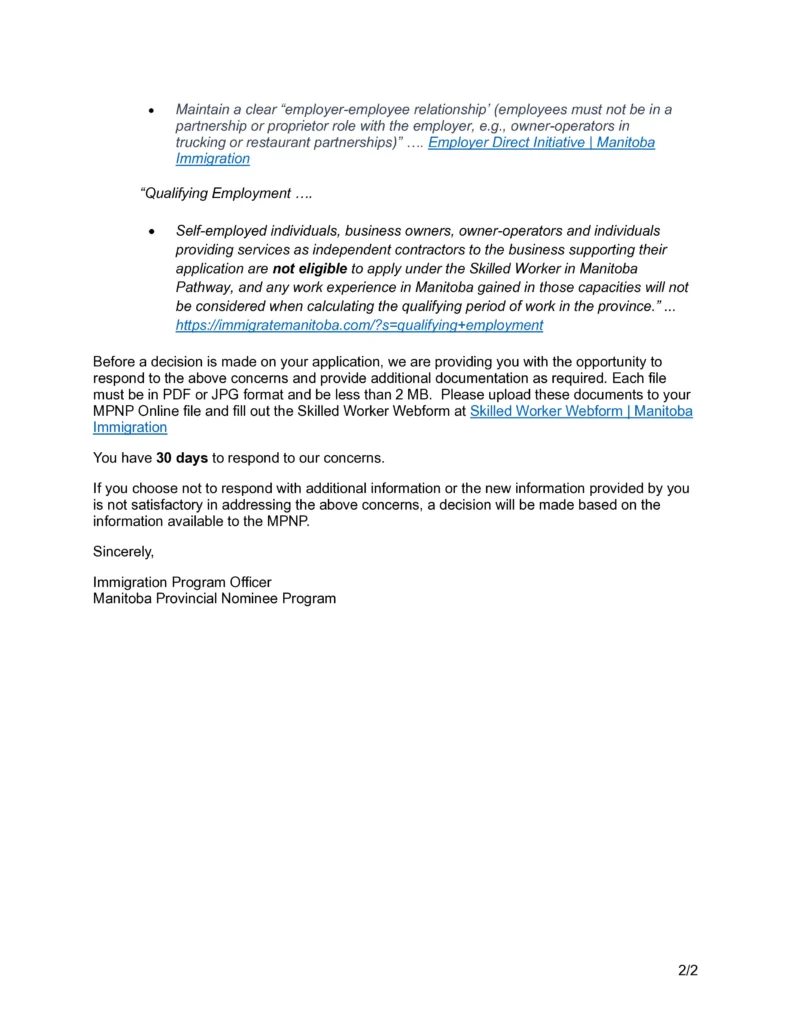
Where the MPNP identifies potential misrepresentation or inconsistencies, the applicant or nominee may receive a Procedural Fairness Letter (PFL), providing an opportunity to respond to the concerns and submit supporting evidence before a negative decision is made.
If you receive a Procedural Fairness Letter (PFL), read it carefully and identify exactly which information or documents the officer is questioning. Your response must be truthful, clear and complete. Address each concern directly, and support your answers with genuine documents.
If there is a discrepancy or inconsistency, explain honestly how it happened. Do not hide it, minimize it or invent an explanation. If an error was made, such as a clerical mistake, a misunderstanding or an outdated document, acknowledge it and provide proof of the correct facts. If the information you originally provided was accurate, explain why and include credible evidence that confirms it.
Please keep in mind that you are ultimately responsible for everything submitted in your application, including anything prepared or filed by your immigration representative. If a representative has provided information that is incorrect, incomplete or misleading, the responsibility still rests with the applicant. For this reason, we encourage you to review every document and statement submitted on your behalf, and to be ready to explain and correct any error honestly and promptly.
Receiving a PFL for providing false, inaccurate or misleading information does not mean your nomination has been refused. It does mean the MPNP has concerns that must be addressed. Because the outcome can affect your nomination and your future applications, we strongly advise retaining an experienced immigration lawyer to help you prepare a thorough response supported by genuine evidence.
Frequently Asked Questions
Can MPNP verify my documents after issuing a nomination?
Yes. The MPNP may conduct further verification with employers, organizations and other relevant sources, including after nomination, if concerns arise about the information or documents submitted.
What is the penalty for providing false or misleading information to MPNP?
Under the MPNP's Truthful and Correct Information Policy, consequences may include application rejection, nomination withdrawal and a two-year restriction on submitting another MPNP application, where the applicable policy requirements are met.
If my immigration representative makes a mistake in my MPNP application, who is responsible?
You are. The applicant remains responsible for everything submitted, including documents prepared by a representative. We encourage you to review all documents before they are filed and to correct any error promptly through the webform.