Being refused
entry to Canada can be a stressful and confusing experience, especially if you
were not expecting it.
Many travelers
assume that if they have a valid passport and travel documents, crossing the
border should be routine. However, Canadian border officers must also assess
whether a person is admissible under Canadian immigration law.
If a traveler
is found to be inadmissible—for example, due to a criminal record—they may be
denied entry at the border.
Understanding
what happens during this process can help travelers know what to expect and
what steps may come next.
How Border
Officers Assess Admissibility
Canada Border
Services Agency (CBSA) officers are responsible for screening travelers
entering the country.
When someone
arrives at a port of entry, officers may review:
● travel documents
● criminal history records
● previous immigration history
● the purpose of the visit
If the officer
believes there may be grounds of inadmissibility, they may ask additional
questions or request documentation.
What Happens
During a Refusal of Entry
If a border
officer determines that a person is inadmissible, the traveler may be refused
entry and required to return to their country of origin or the location they
traveled from.
Depending on
the situation, the officer may:
● issue a refusal of entry decision
● allow the traveler to withdraw their application to
enter Canada
● document the inadmissibility in immigration records
Being refused
entry does not automatically mean someone will never be allowed into Canada.
However, it may affect future travel until the inadmissibility is addressed.
Common
Reasons Travelers Are Refused Entry
Some of the
most common reasons travelers are denied entry include:
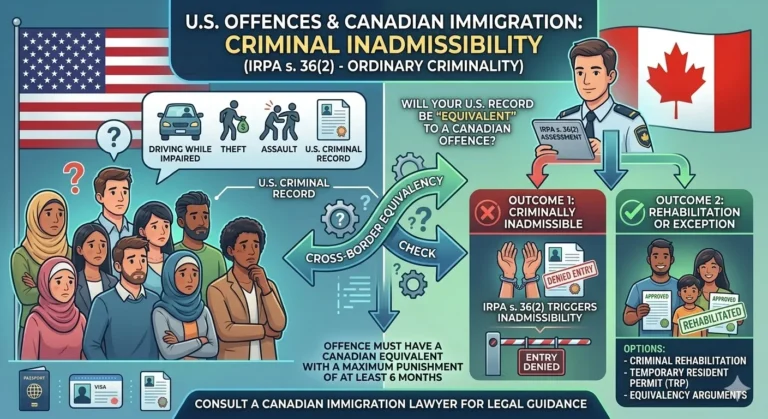
● criminal inadmissibility due to past convictions
● misrepresentation or incomplete information
● lack of proper travel documentation
● concerns about the purpose of travel
For Americans,
criminal inadmissibility—particularly for offences such as DUI—is one of the
most frequent issues encountered at the border.
What Can Be
Done After a Refusal
If someone has
been refused entry due to criminal inadmissibility, there may still be options
available depending on the circumstances.
Possible
options may include:
Temporary
Resident Permit
A Temporary
Resident Permit may allow entry to Canada for a limited period if there is a
valid reason for travel.
Criminal
Rehabilitation
Criminal
rehabilitation may permanently resolve inadmissibility related to past offences
once eligibility requirements are met.
Legal Review
of the Case
In some
situations, it may be helpful to review the underlying offence and determine
whether it truly creates inadmissibility under Canadian law.
Looking
Ahead After a Border Refusal
Being refused
entry can be frustrating, but it does not necessarily close the door to future
travel to Canada.
Many people
successfully resolve inadmissibility issues and are later able to visit Canada
once the proper steps have been taken.
Understanding
the reason for the refusal and exploring available options is often the first
step toward resolving the issue.
Sources
Canada Border Services Agency – Entry to
Canada
Immigration
and Refugee Protection Act (IRPA)
IRPA –
Criminal Inadmissibility (Section 36)
Government
of Canada – Criminal inadmissibility and entering Canada