If you are an American planning a trip to Canada, an old criminal issue may be the last thing
on your mind.
Maybe it was a DUI years ago. Maybe you were charged with something in your twenties and the
charges were later dropped. Maybe you paid a fine, finished probation, and moved on with your life. In the United States, it might feel like that chapter is long closed.
But when it comes to crossing the Canadian border, those old issues can sometimes come back
into focus.
Canada has its own immigration laws, and Canadian border officers apply Canadian law, not U.S. law, when deciding whether someone can enter the country. That means a past offence or sometimes even past conduct can make someone criminally inadmissible to Canada.
Understanding how this works can help you avoid surprises when you arrive at the border.
Why Canada Looks at U.S. Offences Differently
Many Americans assume that if something was treated as a misdemeanor in the U.S., it will not
be a problem in Canada.
Unfortunately, that is not always the case.
When Canadian immigration authorities review a criminal record from another country, they do
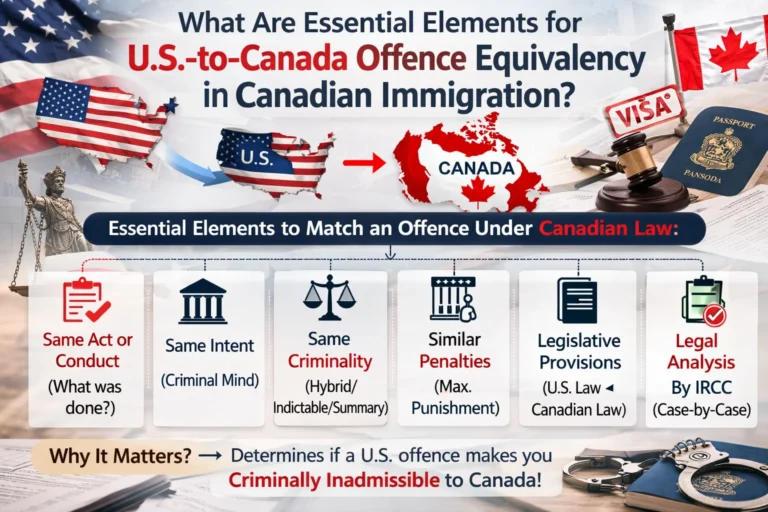
not simply look at the label used in the United States. Instead, they compare the offence to the Canadian equivalent under Canadian law.
The key question becomes: what would this conduct be considered under Canadian law?
Because Canadian criminal laws are structured differently, an offence that seemed relatively minor in the U.S. can sometimes be treated more seriously in Canada.
What Is Criminal Inadmissibility?
Criminal inadmissibility is governed by section 36 of the Immigration and Refugee Protection Act (IRPA).
Under this law, a person may be denied entry to Canada if they:
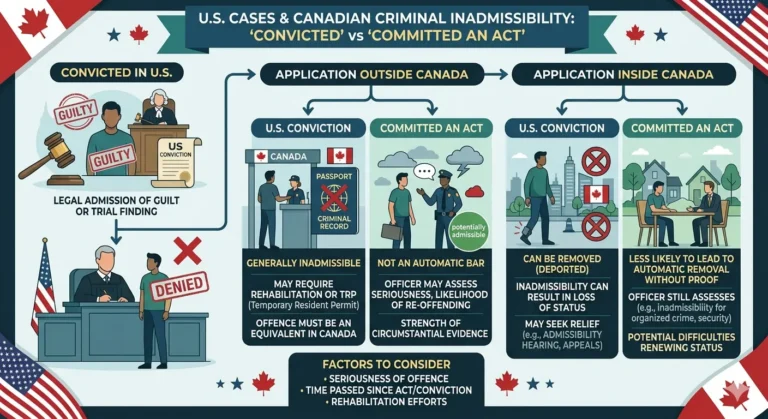
● were convicted of a crime in Canada
● were convicted outside Canada of an offence that would be a crime in Canada
● committed an act outside Canada that would be considered an offence if it had occurred in Canada
In other words, Canada can assess both convictions and underlying conduct when determining admissibility.
The law also distinguishes between criminality and serious criminality, which can affect what options may be available to someone trying to enter Canada.
Common U.S. Offences That Can Make Someone Inadmissible
Many Americans are surprised to learn that relatively common offences can create problems at
the Canadian border.
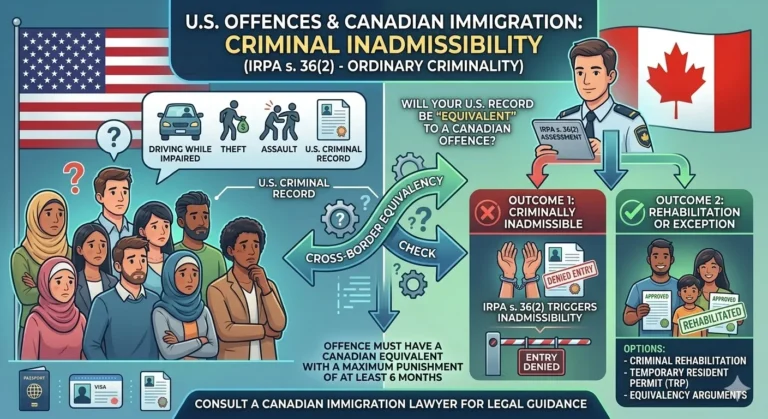
Some of the offences that frequently lead to inadmissibility issues include:
1. DUI or DWI
Impaired driving is treated very seriously under Canadian law and can result in criminal inadmissibility.
2. Assault
Even relatively minor assault convictions can raise immigration concerns when entering Canada.
3. Theft or shoplifting
Offences involving theft—even small amounts—may correspond to Canadian criminal offences.
4. Fraud or financial crimes
Crimes involving dishonesty or financial deception can lead to admissibility problems.
5. Drug possession offences
Possession of controlled substances can result in inadmissibility depending on the circumstances.
6. Drug trafficking or distribution offences
More serious drug offences can create significant immigration barriers.
7. Domestic violence-related offences
Offences involving violence against a partner or family member are taken very seriously.
8. Weapons offences
Convictions involving firearms or prohibited weapons can lead to inadmissibility.
9. Dangerous or reckless driving offences
Some driving offences beyond impaired driving can still cause problems at the border.
10. Multiple minor offences
Even if each offence seems relatively small, having multiple convictions can still lead to criminal inadmissibility.
Because each case depends on the details of the offence and how it compares to Canadian law,
two people with similar charges in the United States may still face very different outcomes in Canada.
Why Many Americans Only Discover This at the Border
One of the most common situations we see is someone learning about criminal inadmissibility
only when they arrive at the border.
Canadian border officers have access to shared law enforcement databases and may identify past
criminal records during routine inspections.
From the traveler’s perspective, the offence may feel like something that was resolved years ago. But from Canada’s perspective, it may still be relevant when determining whether someone can enter the country.
That is why it is often helpful to review your situation before traveling to Canada.
Can Americans With Criminal Records Still Enter Canada?
In many cases, yes.
A criminal record does not automatically mean someone can never enter Canada. Depending on
the circumstances, there may be ways to overcome inadmissibility.
Some possible options include:
● Temporary Resident Permits (TRPs)
● Criminal Rehabilitation applications
● Deemed Rehabilitation
Each option depends on factors such as the type of offence, the sentence imposed, and how
much time has passed since the sentence was fully completed.
For example, Criminal Rehabilitation may allow someone to permanently resolve their inadmissibility once enough time has passed and they can demonstrate they are unlikely to reoffend.
Why It Helps to Get Legal Advice Before Traveling
Criminal inadmissibility cases often depend on small but important details, including:
● the exact U.S. statute involved
● the sentence imposed
● whether all fines or probation conditions were completed
● how long ago the offence occurred
● the Canadian equivalent of the offence
Two people may both say they had a DUI or an assault charge, but their admissibility outcomes
in Canada may still be very different.
A proper review can help determine whether inadmissibility applies and what steps may be
available before attempting to enter Canada.
If you’re facing admissibility concerns, including criminal inadmissibility, A&M Canadian Immigration Law Corporation in Winnipeg is here to help. Reach out or book a consultation online.
Sources
Disclaimer
This content is for general educational information only and is not legal advice. Immigration
laws and policies may change, and every case depends on its specific facts. If you have concerns about criminal inadmissibility, consult a qualified immigration lawyer before making travel plans or submitting applications.
Written
by:
Dr. Muhammad
Abrar (Barrister and Solicitor)
Author | Writer | Mentor | Legal Researcher | Canadian
Immigration Case Law and Statistics Analyst