Logo of A&M Canadian Immigration law Corporation

Can Sexual Assault in California, New York, or Minnesota Lead to Criminal Inadmissibility in Canadian Immigration?

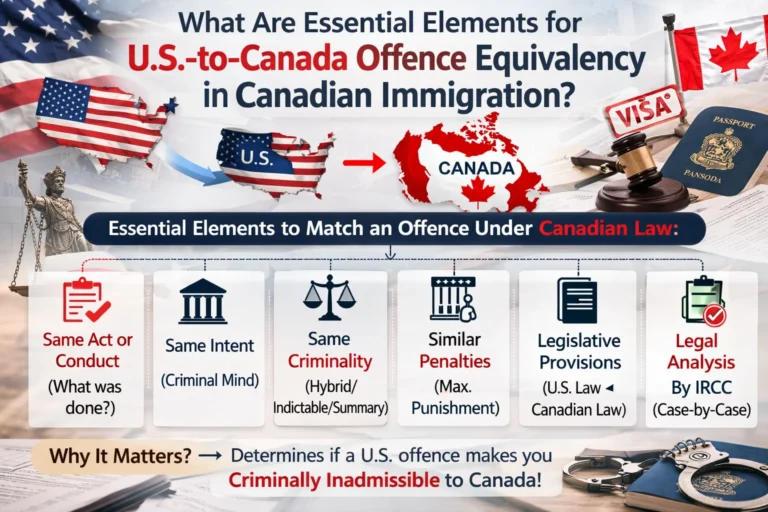
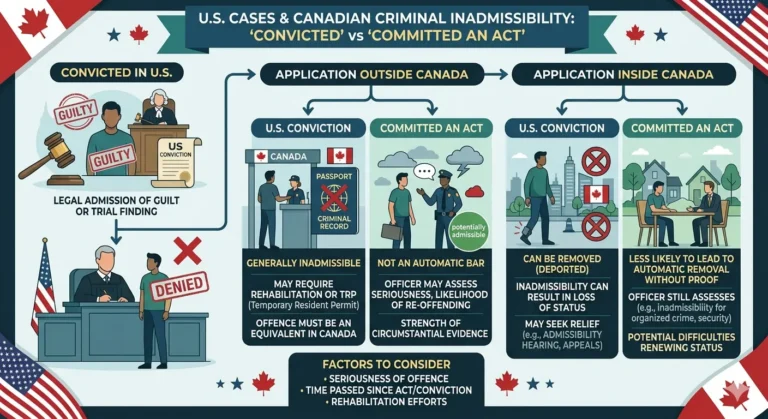
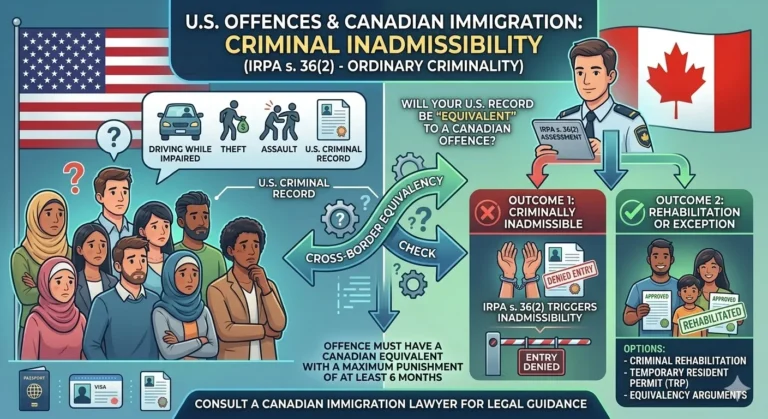
If you have a U.S. conviction involving sexual assault / sexual battery / sexual abuse / criminal sexual conduct, Canadian officers may assess you for criminal inadmissibility under IRPA s. 36. The process is typically:

  1. Criminal equivalency: match the U.S. offence’s essential elements to the closest Canadian offence, then
  2. Apply IRPA s. 36 (serious criminality vs ordinary criminality).
     Source: IRPA s. 36

1) Canada’s baseline: three levels of sexual assault offences

Canada’s Criminal Code structures sexual assault offences in tiers that often drive the inadmissibility analysis once equivalency is established.

A) Sexual assault — s. 271 (hybrid; max 10 years on indictment)

        s. 271 is the general sexual assault offence.

        If prosecuted by indictment, the maximum is 10 years (with different rules if the complainant is under 16).

Inadmissibility link: A Canadian equivalent with a 10-year maximum commonly triggers a serious criminality analysis for foreign convictions under IRPA s. 36(1).

B) Sexual assault with a weapon / threats / bodily harm — s. 272 (indictable; max 14 years)

        s. 272 is a higher-tier offence and is indictable with a maximum of 14 years in the general case (and higher in some firearm/under-16 scenarios).

C) Aggravated sexual assault — s. 273 (indictable; life)

        s. 273 is the highest tier and is punishable by life imprisonment.

2) Equivalency chart: California, New York, Minnesota typical Canadian matches

Important: State labels differ. The closest Canadian match depends on the statute section, the elements, and the record of conviction.

State

Common offence label / statute

What it generally covers (high level)

Typical Canadian equivalent(s)

California

PC § 261 (rape)

Sexual intercourse under specified non-consent circumstances

Often assessed against s. 271 or higher tiers depending on record

California

PC § 243.4 (sexual battery)

Non-consensual sexual touching (various scenarios; includes misdemeanor/felony pathways)

Often assessed against s. 271 (or other Canadian offences depending on facts)

New York

PL § 130.65 (sexual abuse 1st)

“Sexual contact” by forcible compulsion / incapacity / certain age scenarios

Often assessed against s. 271 (or higher tiers if weapon/threat/bodily harm facts appear in the record)

Minnesota

§ 609.342 (criminal sexual conduct 1st degree)

Sexual penetration with aggravating factors (weapon/threat, injury, force, etc.)

Often assessed against s. 272 or s. 273 depending on the proven aggravating factors

Minnesota

§ 609.343 (criminal sexual conduct 2nd degree)

Sexual contact with aggravating factors (weapon/threat, injury, force, etc.)

Often assessed against s. 271 or s. 272 depending on record

3) Why “hybrid” matters (and why many cases are treated as serious)

        s. 271 is hybrid, meaning it can be prosecuted summarily or by indictment.

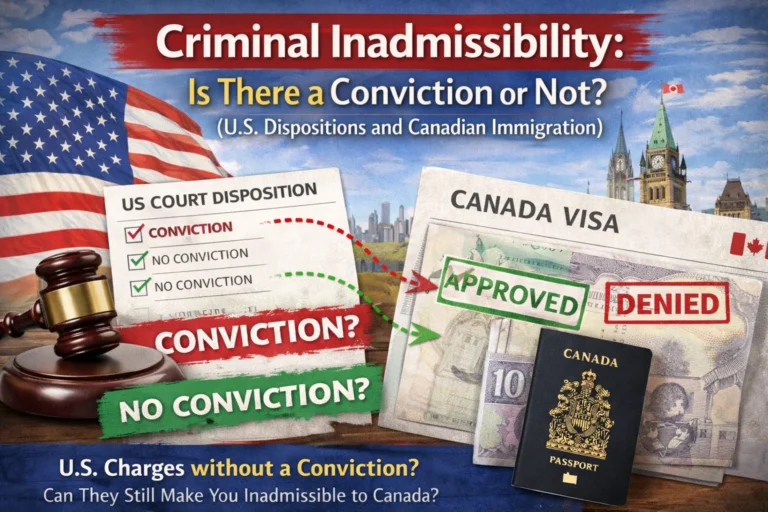
        Under immigration law, hybrid offences are treated as indictable when assessing inadmissibility pathways that depend on indictability. (This is one reason “misdemeanor” U.S. outcomes can still cause Canada border issues.)
 Source: IRPA s. 36(3)(a)

Serious criminality trigger: If the Canadian equivalent has a maximum of 10 years or more (like s. 271, s. 272, s. 273), officers may analyze the case under serious criminality (IRPA s. 36(1)) for foreign convictions.

4) What documents usually decide the outcome (U.S. cases)

Sexual offences often have multiple degrees/subsections. A defensible equivalency review typically needs:

        exact statute section (and the version in force at the time)

        charging document

        judgment/disposition

        sentencing order

        where needed, the plea factual basis / agreed statement of facts (to confirm aggravating factors like weapon/threat/injury)

You can consult A&M Canadian Immigration Law Corporation for If you need to visit, study, work, or immigrate to Canada and you have a sexual offence record from California, New York, or Minnesota, our document-based equivalency review can identify the closest Canadian tier (s. 271 / 272 / 273) and assess potential criminal inadmissibility under IRPA s. 36.

Disclaimer (Educational Use Only)

This content is for general educational and informational purposes only and is not legal advice. Immigration laws, regulations, and officer practices can change. U.S. sexual offence laws vary by state and can change over time, and outcomes depend on the exact statute section, offence date, and official court records.


Sources (hyperlinks)

        IRPA s. 36 (criminal inadmissibility)

        Canada Criminal Code s. 271 (sexual assault)

        Canada Criminal Code s. 272 (sexual assault with a weapon / threats / bodily harm)

        Canada Criminal Code s. 273 (aggravated sexual assault)

        California Penal Code § 261 (rape)

        California Penal Code § 243.4 (sexual battery)

        New York Penal Law § 130.65 (sexual abuse 1st)

        Minnesota Stat. § 609.342 (criminal sexual conduct 1st)

        Minnesota Stat. § 609.343 (criminal sexual conduct 2nd)

    Frequently Asked Questions

    Yes. If the offence matches a Canadian sexual assault offence and meets IRPA thresholds, you may be found inadmissible when attempting to visit Canada.

     Often, yes. Different state offences may map to different Canadian tiers (s. 271 vs s. 272 vs s. 273), depending on statutory elements and the record.

    Many sexual offence equivalents in Canada have 10+ year maximums (or life), which commonly leads to a serious criminality analysis for foreign convictions under IRPA s. 36(1).

    Latest News

    Visit our Social Media:

    CATEGORIES

    Send Us A Message

    Contact our office for details. Our immigration legal service in Winnipeg will assess your eligibility per CIC criteria and submit your application.