For many Americans, criminal inadmissibility becomes a problem right when travel plans
are already in motion.
A business meeting is scheduled in Toronto. A family wedding is happening in Vancouver. A
road trip across the border has been planned for months.
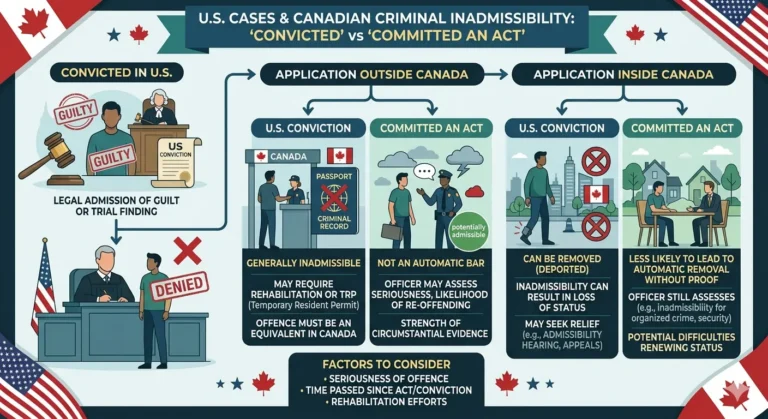
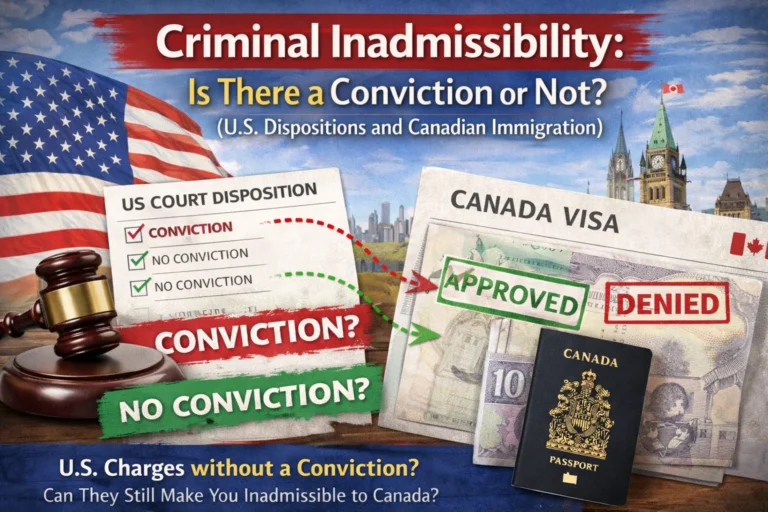
Then the question appears: will an old conviction prevent entry to Canada?
If the five-year waiting period for criminal rehabilitation has not yet passed, there may still be another option available — a Temporary Resident Permit, often called a TRP.
What a Temporary Resident Permit is
A Temporary Resident Permit allows someone who is otherwise inadmissible to Canada to enter the country for a limited period of time.
This authority comes from section 24 of the Immigration and Refugee Protection Act (IRPA).
It allows immigration officers to admit a person if they decide that the reason for travel outweighs the potential risk to Canadian society.
A TRP does not erase the underlying inadmissibility. Instead, it allows travel for a specific purpose and for a specific period of time.
For Americans who need to enter Canada before they qualify for criminal rehabilitation, a TRP
can sometimes bridge that gap.
When Americans typically use a TRP
Temporary Resident Permits are most often used when someone needs to travel to Canada but
is not yet eligible for rehabilitation.
Common situations include:
• business travel or work meetings
• conferences or professional events
• family emergencies or important family visits
• weddings or funerals
• tourism where travel plans cannot easily be postponed
Every case is assessed individually. Immigration officers will look at both the reason for the trip and the person’s criminal history.
How long a TRP can last
Temporary Resident Permits can vary widely in length.
Some are issued only for the duration of a specific visit, such as a few days or a week.
Others may be granted for longer periods, sometimes months or even years, particularly if the person needs to travel to Canada regularly for work.
The length and conditions of the permit depend entirely on the officer reviewing the case.
Applying at the border vs applying in advance
Americans sometimes try to deal with the issue at the border itself.
In certain situations, it is possible to request a TRP directly from a Canada Border Services Agency officer at a port of entry, such as a land border crossing or airport.
However, this approach carries risk.
A border officer must make a decision on the spot. If the officer is not satisfied with the explanation or the documentation provided, entry may be refused.
Because of that uncertainty, many people choose to apply for a TRP in advance through
Immigration, Refugees and Citizenship Canada.
Applying ahead of time can allow for a more detailed review of the case, although processing
times are usually longer.
How a TRP differs from criminal rehabilitation
Temporary Resident Permits and criminal rehabilitation solve different problems.
A TRP is temporary permission to enter Canada despite inadmissibility.
Criminal rehabilitation, on the other hand, is a permanent solution that can remove the inadmissibility connected to the offence once it is approved.
In practical terms, many Americans first obtain a TRP so they can travel in the short term.
Later, once the five-year waiting period has passed, they may apply for criminal rehabilitation to resolve the issue permanently.
Why documentation matters
As with rehabilitation applications, documentation is critical when requesting a TRP.
Immigration officers generally want to understand:
• what offenceoccurred
• how the case was resolved in court
• when the sentence was completed
• why the person needs to enter Canada now
If those details are unclear or incomplete, the officer may not have enough information to grant the permit.
For Americans, gathering these records can sometimes involve state courts, county courts,
probation offices, and payment records for fines.
Why this issue often appears unexpectedly
Many Americans assume that if a conviction was minor or happened years ago, it will not affect
cross-border travel.
The surprise comes from the fact that Canada applies its own immigration law and its own
criminal classifications.
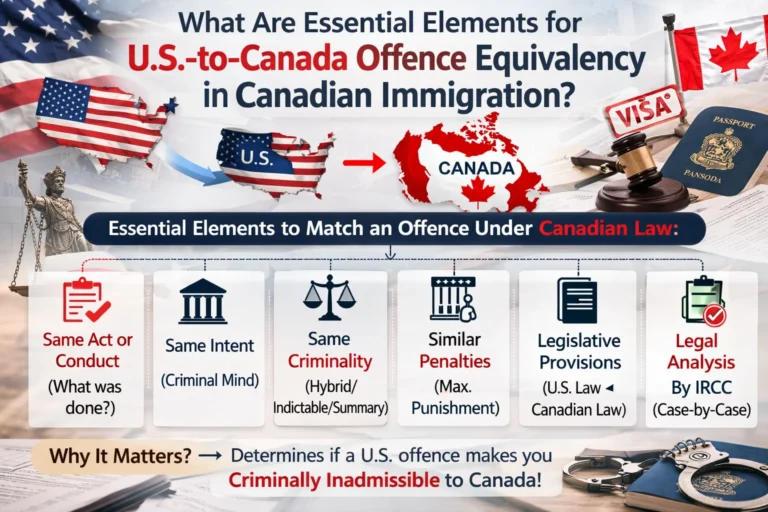
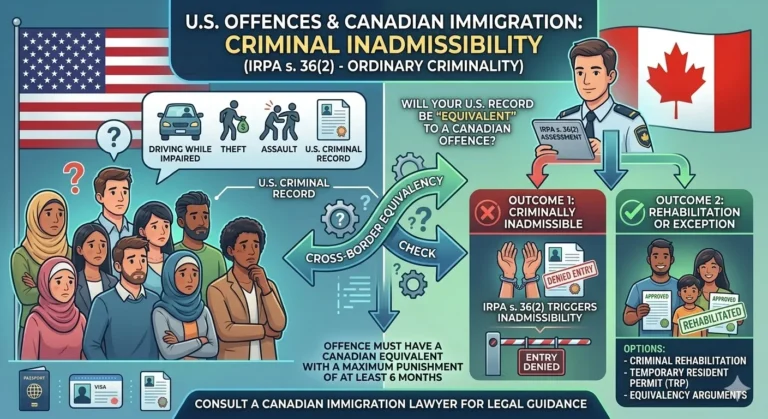
As a result, offences that may seem relatively minor in the United States can still create admissibility issues when entering Canada.
That is why many people only learn about criminal inadmissibility when a border officer raises the issue.
How A&M Canadian Immigration Law Corporation can help
At A&M Canadian Immigration Law Corporation, we help Americans and U.S. residents
understand their options when a criminal record affects travel to Canada.
That can include reviewing the offence, determining the Canadian equivalent, assessing whether a Temporary Resident Permit may be possible, and identifying whether criminal rehabilitation may be available in the future.
Understanding the options before arriving at the border can make a significant difference.
At A&M Canadian Immigration Law Corporation in Winnipeg, we help clients navigate admissibility challenges, including criminal inadmissibility. Get in touch or book your appointment online today.
Sources
Temporary Resident Permits — Immigration, Refugees and Citizenship Canada
Immigration and Refugee Protection Act, section 24
Criminal inadmissibility — Government of Canada
Written by:
Dr. Muhammad
Abrar (Barrister and Solicitor)
Author | Writer | Mentor | Legal Researcher | Canadian
Immigration Case Law and Statistics Analyst