A lot of Americans do not think about their criminal record until they are already on
the way to Canada.
Maybe it was a DUI from years ago. Maybe it was a fight in college, a theft charge, or a drug-related offence that felt like a closed chapter. In the United States, it may no longer feel like a big part of your life. But at the Canadian border, it can suddenly become the only thing anyone wants to talk about.
That is because Canada has its own immigration rules. And under those rules, a past conviction
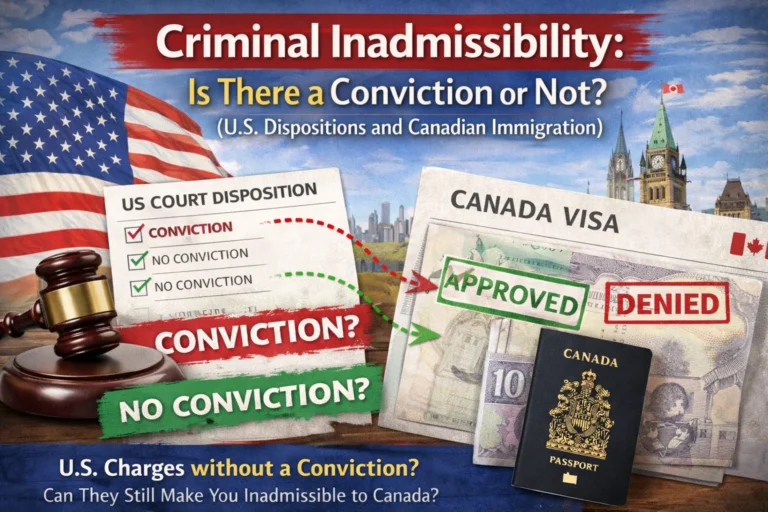
in the U.S. can make you criminally inadmissible to Canada. That does not always mean you are out of options. But it does mean you should understand the issue before you travel, not after you are turned around at the border. The legal framework comes from the Immigration and Refugee Protection Act, especially section 36.
Why a U.S. conviction can still cause trouble in Canada
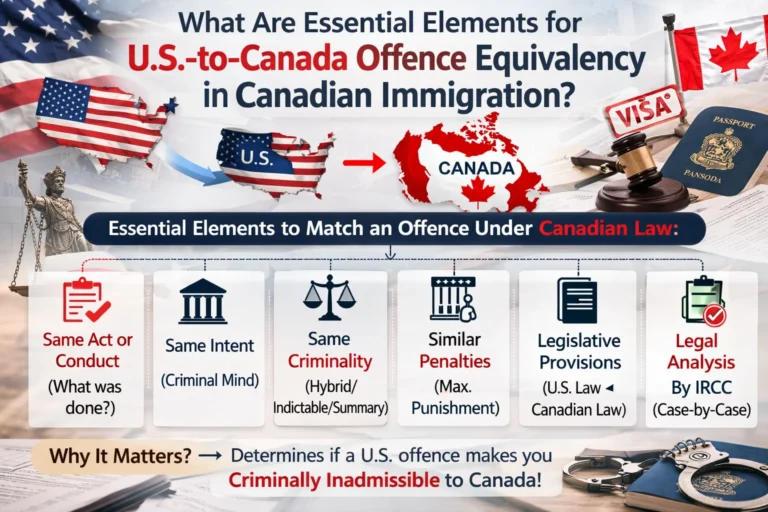
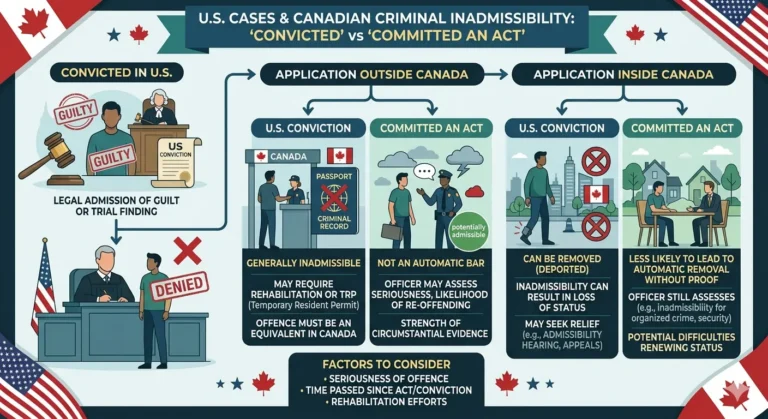
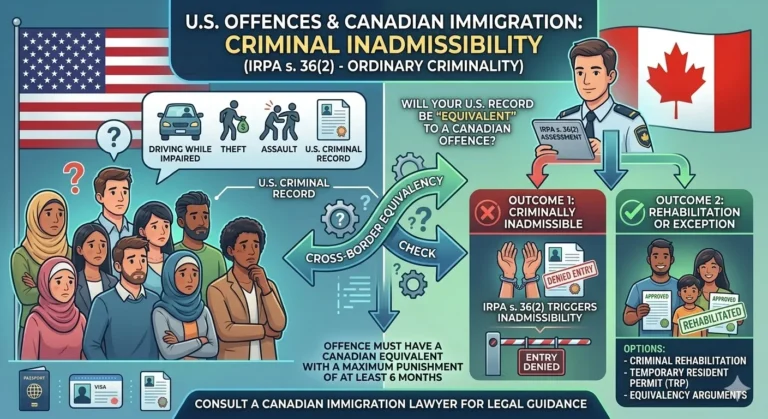
One of the biggest surprises for U.S. travellers is that Canada does not simply accept the American label attached to an offence. Canadian officers look at the underlying conduct and compare it to the Canadian equivalent. That is why an offence described as a misdemeanor in the U.S. can still create serious entry problems in Canada. The Government of Canada specifically notes that if you have committed or been convicted of a crime, you may be inadmissible and may need to overcome that inadmissibility before entering.
For many travellers, common problem offences include impaired driving, assault, theft, fraud, and some drug offences. Canada also states plainly that impaired driving by alcohol or drugs can lead to inadmissibility for serious criminality.
What “criminal inadmissibility” actually means
In simple terms, criminal inadmissibility means Canada believes your criminal history is serious enough to block your entry. Section 36 of the IRPA separates this into serious criminality and criminality. Serious criminality can apply when the Canadian equivalent offence carries a maximum sentence of at least 10 years, or when a sentence of more than six months of imprisonment has been imposed in Canada. The same section also deals with convictions and conduct outside Canada.
That is why people are often caught off guard. They think, “It was only one offence,” or “It was a long time ago.” But the real question is how Canada classifies that offence and whether it still makes you inadmissible today. The government’s own help materials say this analysis can be complex because it involves comparing foreign and Canadian laws.
Does this mean you can never visit Canada?
Not necessarily.
This is the part many people find reassuring: being criminally inadmissible does not automatically mean Canada is closed to you forever. In fact, the Government of Canada says there are several ways someone may still be allowed to come to Canada despite a criminal record. Depending on the offence and the time that has passed, you may be allowed in if you are deemed rehabilitated, approved for individual rehabilitation, granted a pardon or record suspension where applicable, or issued a Temporary Resident Permit.
Temporary Resident Permits
A Temporary Resident Permit, usually called a TRP, can let someone enter Canada temporarily even though they are still inadmissible. This is often used when there is a real reason for the trip, such as an important business meeting, a family emergency, or another justified purpose. The Government of Canada explains that a TRP may be offered when the reason to travel is justified in
the circumstances and the person does not pose an unacceptable risk.
A TRP is not a permanent fix. It is more like a temporary bridge that may allow the trip to
happen despite the inadmissibility.
Criminal Rehabilitation
For many Americans, Criminal Rehabilitation is the stronger long-term option.
This is the formal process where you ask Canada to recognize that you have been rehabilitated and are unlikely to commit new offences. The Government of Canada says you can usually apply if at least five years have passed since you finished your criminal sentence. If less than five years has passed, you may still be considered only for temporary entry rather than full rehabilitation.
If rehabilitation is approved, it can permanently resolve the inadmissibility tied to that offence. For many people, that is the goal because it removes the issue instead of simply working around it for one trip.
Deemed Rehabilitation
Some people may not need to file a full rehabilitation application at all. In certain cases, they may be considered deemed rehabilitated if enough time has passed and the offence fits the legal requirements. Canada’s official guidance says this often applies, in most cases, to people with one previous conviction from more than 10 years ago, though the exact answer depends on the crime and the surrounding facts. U.S. residents can even ask to be assessed for deemed rehabilitation at a Canadian port of entry, as long as they bring the right supporting documents.
This is where people often make mistakes. They assume they qualify because the offence is
old, when the legal answer is actually more technical than that.
Why it helps to look at this before you travel
A lot of stress can be avoided by reviewing the issue before you are standing at the border
with luggage in the trunk and hotel reservations already paid for.
These cases often come down to details: the exact statute, the date of conviction, the
sentence, the date the sentence was fully completed, and the Canadian equivalent of the offence. Two people can both say they had a DUI, but their admissibility outcomes may still be different.
That is why getting proper advice early can make such a difference. Sometimes the answer is
that you are still inadmissible and need a TRP. Sometimes the answer is that you may qualify for Criminal Rehabilitation. And sometimes the answer is that you may already be deemed rehabilitated. But it is much better to know that before you travel.
We help Americans understand whether a U.S. conviction may affect their ability to enter Canada and what options may be available. Get expert help with criminal inadmissibility and other immigration concerns. Contact A&M Canadian Immigration Law Corporation or book your consultation online now.
Sources
Immigration and Refugee Protection Act
Immigration and Refugee Protection Act, section 36
Government of Canada – Find out if you’re inadmissible
Government of Canada – Overcome criminal convictions
Government of Canada – Rehabilitation guide
Government of Canada – Deemed rehabilitation
IRCC Help Centre – Can I enter Canada if I am criminally inadmissible?
Disclaimer
This article is for general educational information only and is not legal advice. Immigration
law can change, and every case depends on its own facts. If you are concerned about criminal inadmissibility, get legal advice before making travel plans or submitting an application.
Written by:
Dr. Muhammad
Abrar (Barrister and Solicitor)
Author | Writer | Mentor | Legal Researcher | Canadian Immigration Case Law and Statistics Analyst