When criminal law and immigration law intersect, things can quickly become confusing. Many
people assume that immigration authorities can only act after a criminal conviction. In reality, Canadian immigration law sometimes operates under different rules and different standards of proof.
One of the most important distinctions involves the legal standards used to assess criminal
conduct. Two phrases often appear in immigration discussions:
● Reasonable grounds to believe
● Beyond a reasonable doubt
These standards serve different purposes and can affect foreign nationals and permanent
residents in different ways.
Understanding why the standards are different can help explain why someone may face
immigration consequences even without a criminal conviction.
Why Immigration Law Uses a Different Standard
Criminal courts and immigration proceedings serve very different purposes.
A criminal trial determines whether someone is guilty of committing a crime and whether they should face penalties such as fines, probation, or imprisonment. Because of the seriousness of those consequences, the prosecution must prove the offence beyond a reasonable doubt, which is the highest standard of proof in Canadian law.
Immigration proceedings, on the other hand, are not criminal trials. They are administrative processes used to determine whether someone can enter or remain in Canada.
For that reason, immigration authorities may rely on a different evidentiary standard when making inadmissibility decisions.
The “Reasonable Grounds to Believe” Standard
In immigration law, many inadmissibility findings are made using the standard of reasonable
grounds to believe.
This standard is set out in section 33 of the Immigration and Refugee Protection Act (IRPA). It allows immigration decision-makers to rely on credible and trustworthy information to determine whether certain facts exist.
The Supreme Court of Canada has explained that “reasonable grounds to believe” requires more
than mere suspicion, but less than proof beyond a reasonable doubt.
It means there must be reliable information that would lead a reasonable person to believe the event likely occurred.
Evidence that may be considered can include:
● police reports
● court records
● witness statements
● admissions by the individual
● other credible documentation
Because immigration decisions are administrative rather than criminal in nature, this lower standard is considered appropriate.
How Foreign Nationals Are Affected
Foreign nationals—people who are not Canadian citizens or permanent residents—often encounter the “reasonable grounds to believe” standard when immigration authorities assess whether they are inadmissible to Canada.
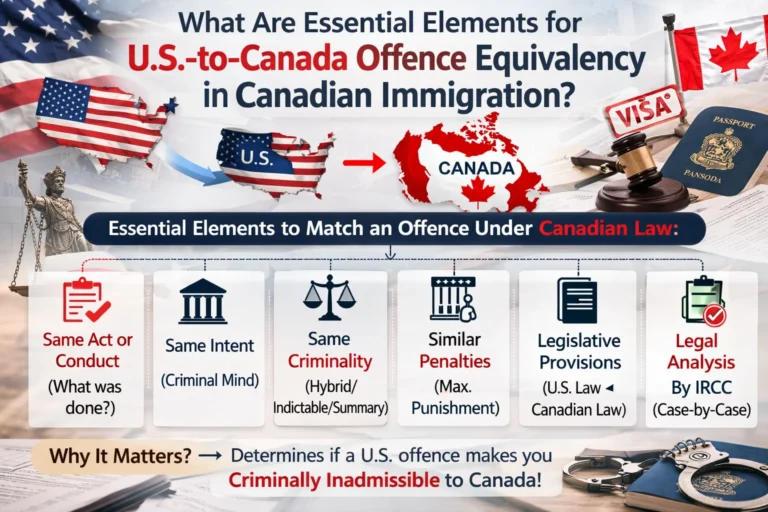
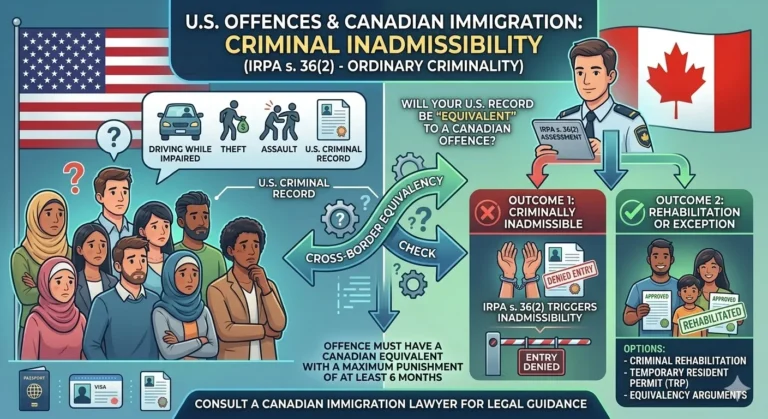
Under section 36 of the Immigration and Refugee Protection Act, a foreign national can be
found inadmissible not only for certain convictions but also for committing an act outside Canada that would be considered an offence both where it occurred and under Canadian law.
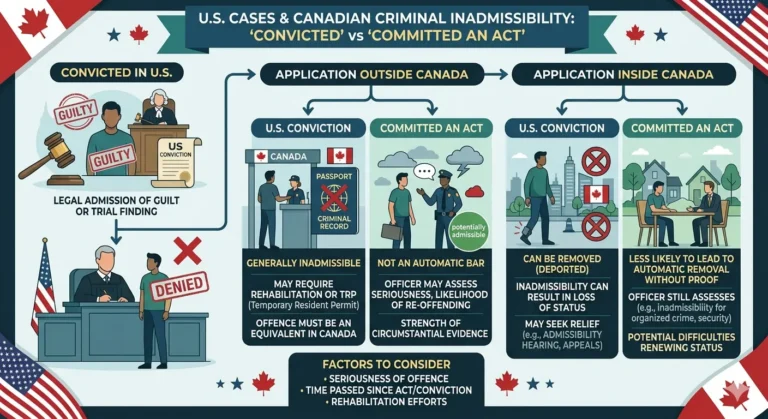
In practical terms, this means a conviction is not always necessary. Immigration authorities may examine the available information and determine whether there are reasonable grounds to believe that the person committed the act.
This is one reason travelers are sometimes surprised to encounter immigration issues even
when a case did not result in a conviction.
How Permanent Residents Are Usually Affected
Permanent residents often encounter criminal inadmissibility in a different context.
In many cases, immigration consequences arise after a criminal conviction in Canada.
Under section 36(1) of IRPA, a permanent resident may be found inadmissible for serious criminality if they:
● are convicted in Canada of an offence punishable by a maximum sentence of at least ten years, or
● receive a sentence of imprisonment of more than six months.
Because these situations depend on a criminal conviction, the criminal court process—where
guilt must be proven beyond a reasonable doubt—usually occurs first.
Once a conviction is entered, immigration authorities may then assess the person’s admissibility.
Why the Distinction Matters
The difference between these two standards can lead to outcomes that people do not expect.
For foreign nationals, immigration authorities may rely on the reasonable grounds to believe standard when evaluating conduct that occurred outside Canada. In those situations, a criminal conviction is not always required for immigration consequences to arise.
For permanent residents, the issue often arises after a criminal conviction in Canada, which must first be established beyond a reasonable doubt in criminal court.
This distinction helps explain why immigration law sometimes appears to treat similar situations differently depending on the person’s status.
The Intersection of Criminal Law and Immigration Law
Criminal charges, convictions, and immigration status are closely connected. Decisions made during criminal proceedings—such as entering a plea or accepting a sentence—can have serious immigration consequences.
For both foreign nationals and permanent residents, it is important to understand how Canadian immigration law may interpret criminal conduct and how the applicable legal standards may affect their situation.
Sources
Immigration and Refugee Protection Act (IRPA)
IRPA – Section 33 (Reasonable Grounds to Believe)
IRPA – Section 36 (Criminal Inadmissibility)
Mugesera v. Canada (Minister of Citizenship and Immigration), 2005 SCC 40
Tran v. Canada (Public Safety and Emergency Preparedness), 2017 SCC 50
Written
by:
Dr. Muhammad
Abrar (Barrister and Solicitor)
Author | Writer | Mentor | Legal Researcher | Canadian
Immigration Case Law and Statistics Analyst