If you are found inadmissible to Canada, it means Canadian immigration authorities believe there is a legal reason you cannot enter or remain in the country. That can affect people at the border, during a visa or permit application, or even after they have already arrived in Canada. Canada’s inadmissibility rules are set out in the Immigration and Refugee Protection Act (IRPA).
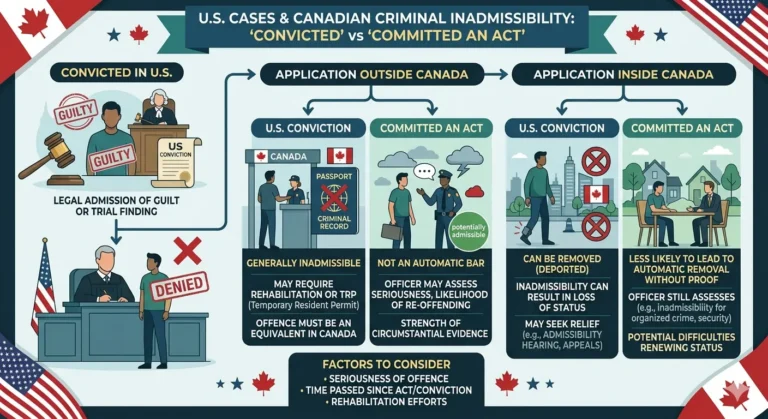
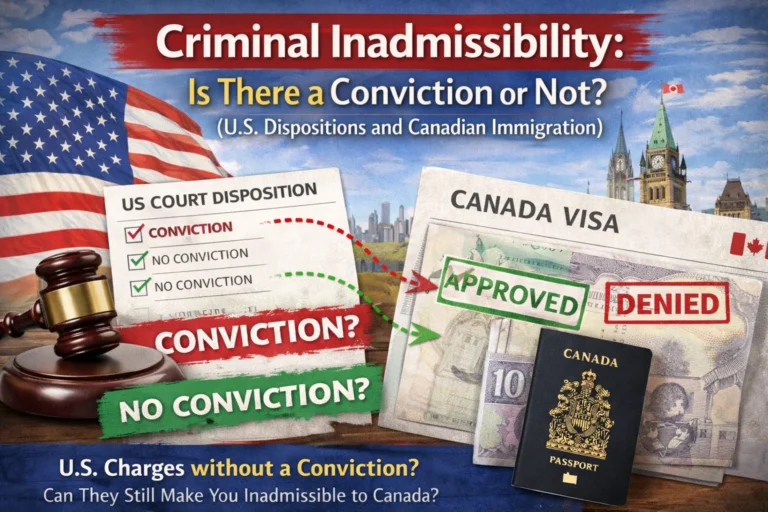
For many people, the surprise is that Canada applies Canadian immigration law, even when the problem happens somewhere else. A conviction or incident outside Canada can still lead to an inadmissibility finding if it matches a ground in Canadian law.
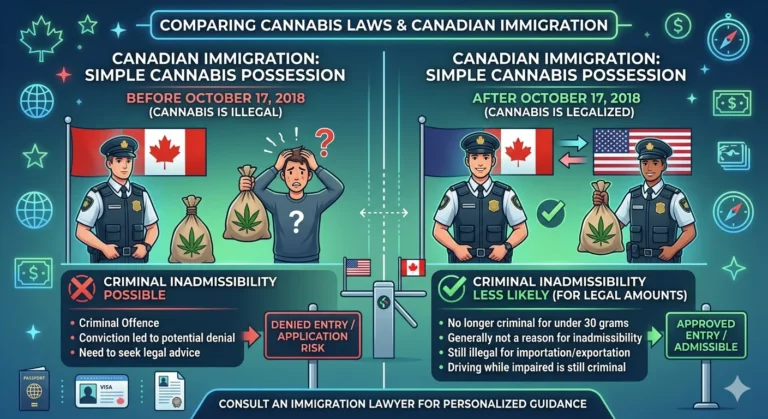
People can be found inadmissible for a number of reasons, including criminal history, security issues, human or international rights violations, health grounds, financial reasons, or misrepresentation. In practice, one of the most common issues is criminal inadmissibility. The Government of Canada also notes that impaired driving by alcohol or drugs, including cannabis, can lead to inadmissibility for serious criminality.
How criminal inadmissibility works
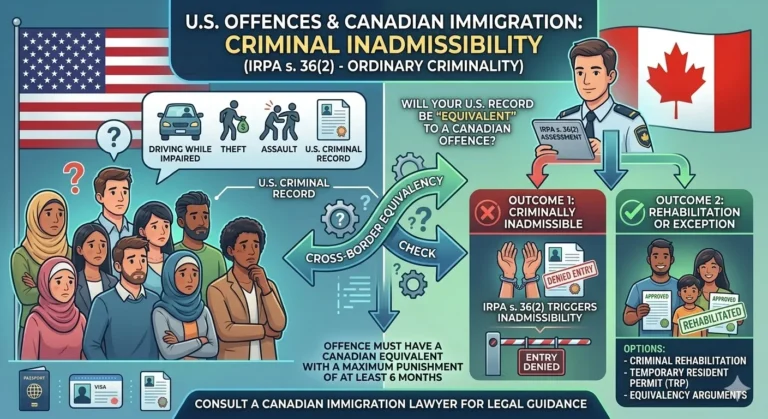
Criminal inadmissibility is mainly dealt with under section 36 of the IRPA. That section distinguishes between serious criminality and criminality.
Serious criminality can apply where a person has been convicted in Canada of an offence punishable by a maximum sentence of at least 10 years, or where a sentence of more than six months has been imposed. Section 36 also covers certain convictions and conduct outside Canada.
This is why people are sometimes caught off guard. They may think an old offence was minor,
but Canadian immigration law looks at how the conduct fits into the Canadian framework, not just how it was labelled somewhere else. The Government of Canada says that if you have committed or been convicted of a crime, there are still ways to overcome criminal inadmissibility.
Is entry still possible if you are inadmissible?
Sometimes, yes.
Being inadmissible does not always mean the answer is permanently no. Depending on
the offence, how long ago it happened, and how you have lived since then, Canada may still allow you to enter through one of several legal pathways. The main options are:
● Temporary Resident Permit
● Criminal Rehabilitation
● Deemed Rehabilitation
The Government of Canada specifically says that, depending on the crime and the time that has
passed, a person may still be allowed to come to Canada if they are deemed rehabilitated, approved for rehabilitation, granted a record suspension, or issued a temporary resident permit.
Temporary Resident Permits
A Temporary Resident Permit, often called a TRP, can allow someone who is inadmissible to enter Canada temporarily if their reason for travel is justified in the circumstances and they do not pose an unacceptable risk. This can matter for people who need to attend an important family event, a business meeting, or another time-sensitive matter before they qualify for a more permanent solution. The Government of Canada describes a TRP as one of the recognized ways to overcome criminal inadmissibility on a temporary basis.
Criminal Rehabilitation
Criminal Rehabilitation is often the stronger long-term option because, if approved, it can permanently resolve the inadmissibility linked to the offence. Canada’s rehabilitation guide explains
that people may be considered criminally inadmissible if they were convicted in Canada, convicted outside Canada of an offence considered a crime in Canada, or committed an act outside Canada that would be punishable under Canadian law.
The same guide explains the rehabilitation process for people seeking to overcome that inadmissibility.
Deemed Rehabilitation
In some situations, a person may not need to file a full rehabilitation application because they may be considered deemed rehabilitated.
Canada’s official guidance says that an officer at the port of entry can review the person’s documents and decide whether they may be deemed rehabilitated and allowed to enter Canada. If not, the person may need to apply for individual rehabilitation instead.
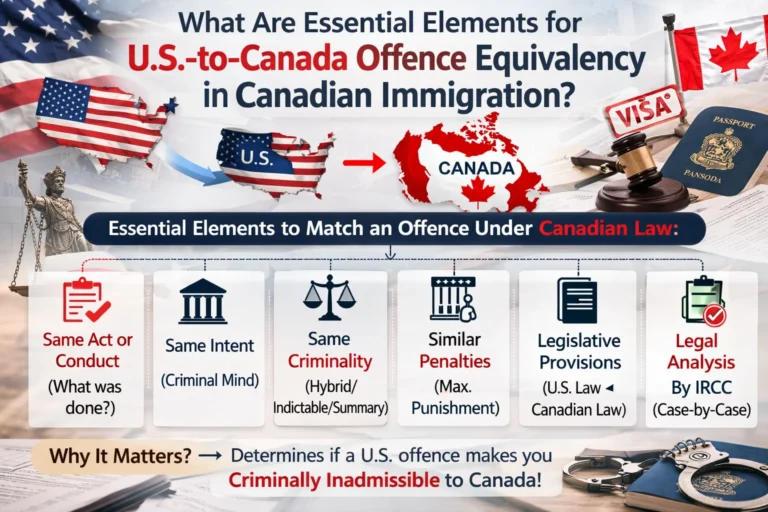
This is where many people make mistakes. They assume enough time has passed and that they automatically qualify, when in reality the answer depends on the offence, the number of offences, and the Canadian legal equivalent.
Inadmissibility cases often look simple at first, but they can turn technical very quickly. The real questions are usually more specific than people expect:
● Does section 36 actually apply to this offence?
● Am I better suited for a TRP or Criminal Rehabilitation?
● Can I realistically argue deemed rehabilitation?
● Do I need to deal with this before I travel?
Getting a clear answer early can help you avoid the stress of being turned away unexpectedly or
filing the wrong type of application.
A&M Canadian Immigration Law Corporation offers professional assistance with Canadian admissibility issues, including criminal inadmissibility. Connect with our Winnipeg-based team or book online.
Sources
● Immigration and Refugee Protection Act
● Immigration and Refugee Protection Act, section 36
● Government of Canada – Find out if you’re inadmissible
● Government of Canada – Overcome criminal convictions
● Government of Canada – Deemed rehabilitation
● Government of Canada – Rehabilitation for persons inadmissible to Canada because of past criminal activity
● IRCC Help Centre – Can I enter Canada if I am criminally inadmissible?
Disclaimer(Educational Use Only)
This content isfor general educational information only and is not legal advice. Immigration
laws and policies can change, and every case depends on its own facts. If you are dealing with inadmissibility issues, get advice from a qualified immigration lawyer before making decisions or relying on general information.
Written
by:
Dr. Muhammad
Abrar (Barrister and Solicitor)
Author | Writer | Mentor | Legal Researcher | Canadian
Immigration Case Law and Statistics Analyst