Americans often
assume that crossing the Canadian border will be straightforward. However, some
travelers encounter unexpected difficulties when Canadian authorities determine
that they may be inadmissible.
One of the most
common reasons for refusal is criminal inadmissibility under section 36 of
the Immigration and Refugee Protection Act.
Understanding
why these refusals occur can help travelers avoid surprises and prepare
appropriately.
How the
Canadian border inspection process works
When a traveler
arrives at a Canadian port of entry, officers from the Canada Border
Services Agency (CBSA) conduct an examination.
This may
include:
● verifying identity and citizenship
● reviewing travel documents
● checking immigration and law enforcement databases
If a potential
issue appears, the traveler may be referred to secondary inspection for
additional questioning.
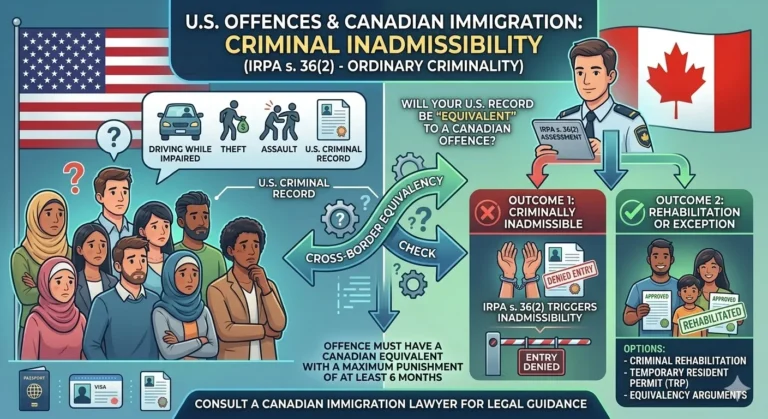
Why criminal
history can lead to refusal
Canadian
immigration law allows authorities to refuse entry when a traveler is
considered inadmissible due to criminal conduct.
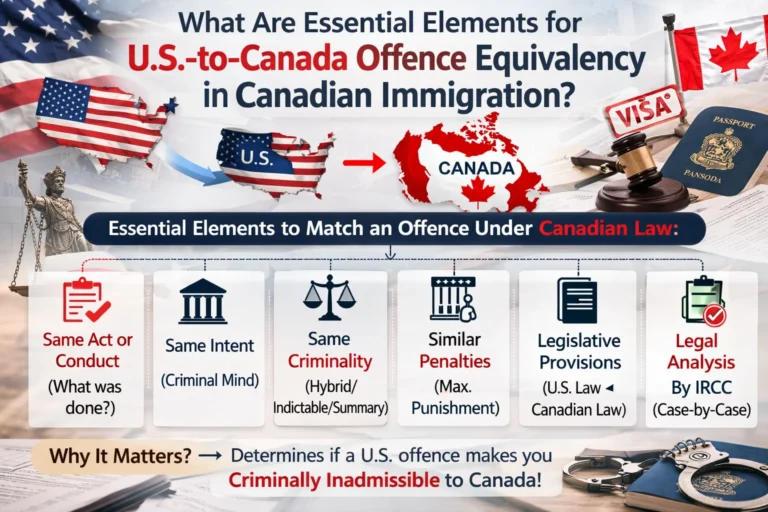
This
determination depends on whether the offence corresponds to a Canadian offence
under section 36 IRPA.
Common
offences that lead to refusals
Offence | Canadian
equivalent | Possible
outcome |
DUI | Impaired
driving | Often serious
criminality |
Assault | Assault | Criminality |
Theft | Theft | Criminality |
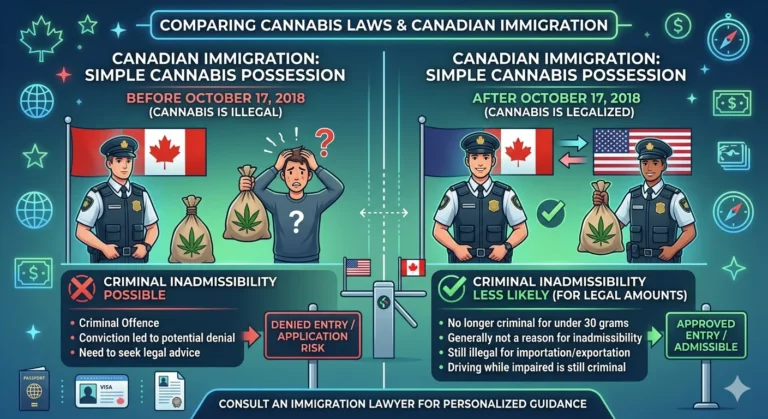
Drug offences | CDSA offences | Criminality or
serious criminality |
The final
determination depends on the details of the offence and the Canadian
equivalent.
Why some
people are surprised by a refusal
Travelers may
be surprised because:
● the offence occurred years earlier
● the conviction seemed minor in the United States
● they previously entered Canada without difficulty
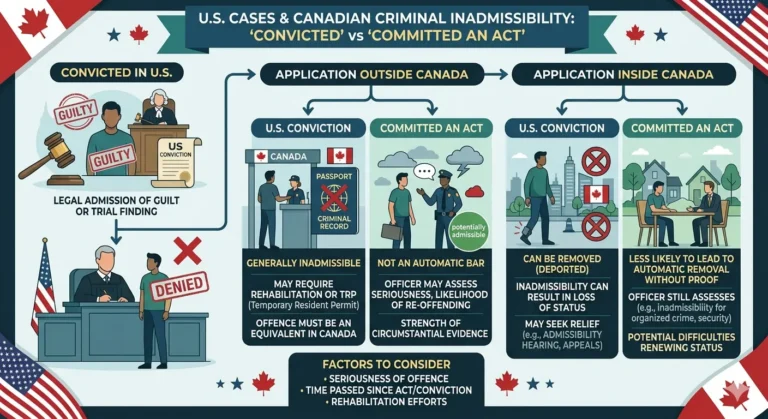
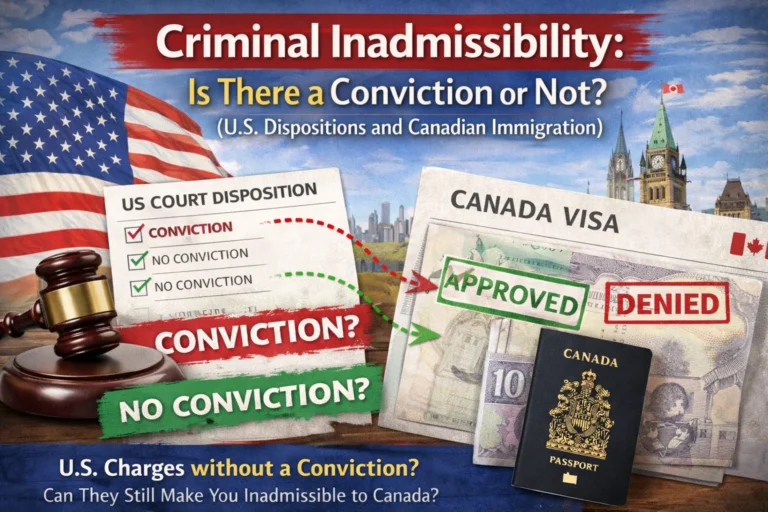
However,
admissibility decisions depend on Canadian law and may change depending on how
the record is assessed.
What to do
after a refusal
Being refused
entry does not necessarily mean travel to Canada will never be possible.
Possible next
steps may include:
● applying for a Temporary Resident Permit
● applying for criminal rehabilitation
● determining whether deemed rehabilitation applies
At A&M
Canadian Immigration Law Corporation in Winnipeg, we help clients navigate
admissibility challenges, including criminal inadmissibility. Get in touch or
book your appointment online today.
Educational
purpose of this article
This article is
intended to provide general educational information about criminal
inadmissibility and border refusals.
Sources
Canada
Border Services Agency
Immigration
and Refugee Protection Act