Many Americans
assume visiting Canada is simple. In most cases, it is. But if you have a
criminal record in the United States, entering Canada may not be as
straightforward as you expect.
Even an offence
from years ago—such as a DUI, a theft charge, or a minor assault—can affect
whether you are allowed to cross the border. Canada applies its own immigration
laws when determining admissibility, and a past conviction in another country
can sometimes make a person criminally inadmissible.
The important
thing to know is that having a criminal record does not automatically mean
Canada is permanently closed to you. In many cases, there are legal options
that may allow you to enter Canada again.
Why Criminal
Records Can Affect Entry to Canada
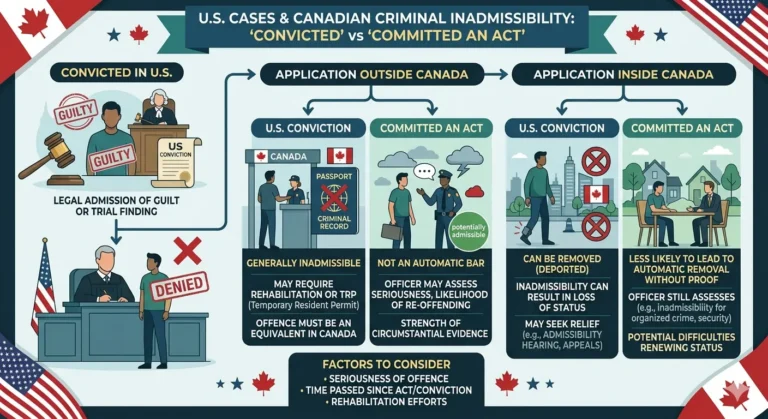
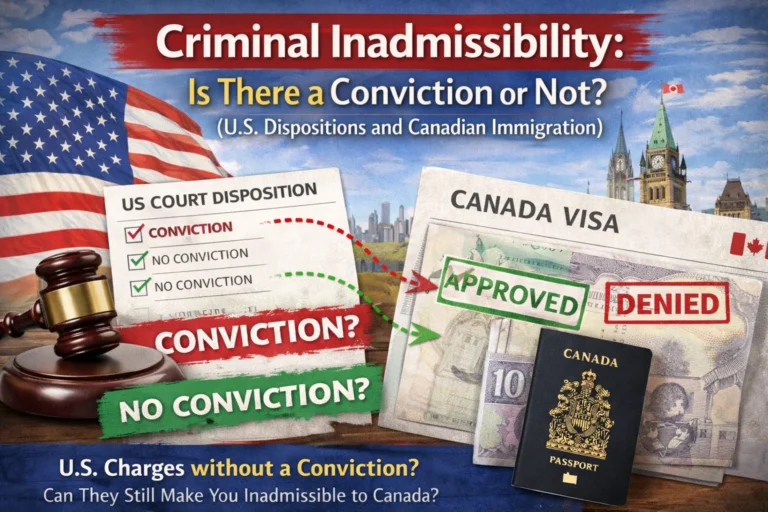
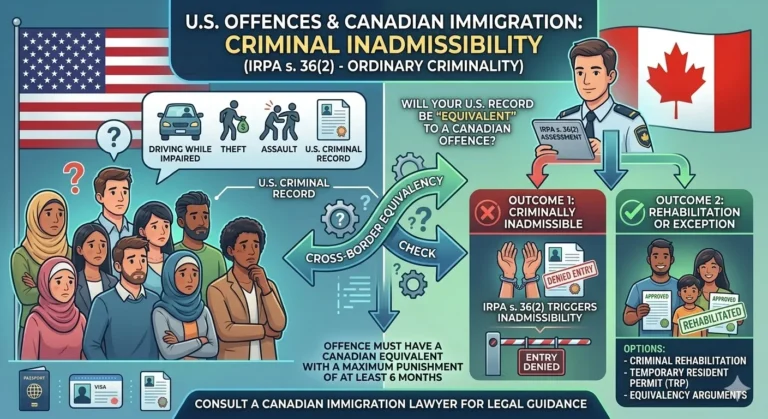
Canada’s
immigration system is governed by the Immigration and Refugee Protection Act
(IRPA). Under section 36 of this law, a person may be inadmissible to
Canada if they:
● were convicted of a crime in Canada
● were convicted outside Canada of an offence that
would also be considered a crime in Canada
● committed an act outside Canada that would be
considered an offence if it occurred in Canada
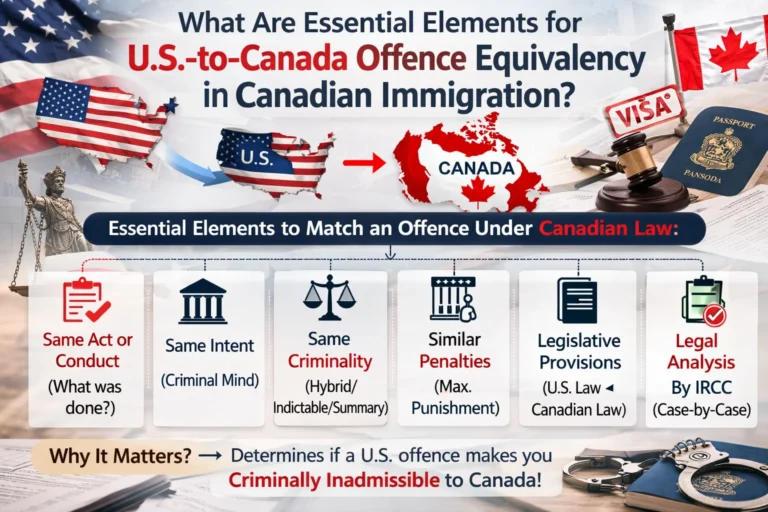
This means
Canadian border officers often compare the U.S. offence to the Canadian
equivalent under Canadian law.
Because the
laws differ between the two countries, an offence that may seem relatively
minor in the United States could still raise concerns under Canadian
immigration law.
Offences
That Can Lead to Criminal Inadmissibility
Some offences
frequently lead to inadmissibility concerns for American travelers, including:
● DUI or impaired driving
● assault
● theft or shoplifting
● fraud or financial crimes
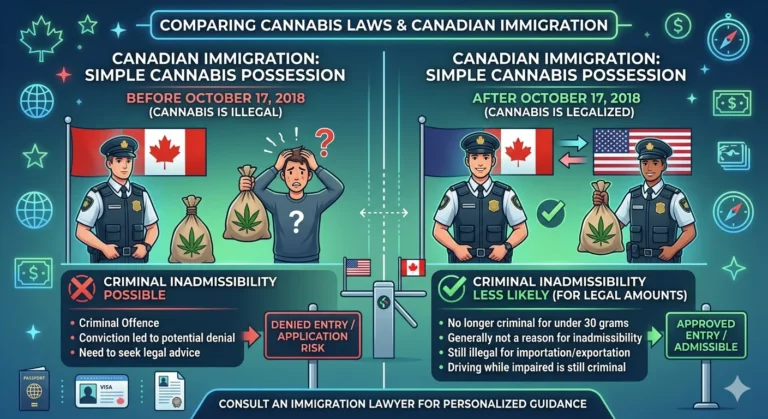
● drug possession
● certain driving offences
● weapons-related offences
In some cases,
even multiple minor offences can create immigration issues.
Options That
May Allow Entry to Canada
If someone is
found criminally inadmissible, several legal options may allow them to overcome
the issue.
Criminal
Rehabilitation
Criminal
rehabilitation is often the best long-term solution. This process allows
someone to permanently overcome inadmissibility if they can demonstrate that
they have been rehabilitated.
Generally,
individuals may apply five years after completing their full sentence,
including fines, probation, and other penalties.
Temporary
Resident Permit (TRP)
A Temporary
Resident Permit allows someone who is otherwise inadmissible to enter
Canada temporarily if there is a legitimate reason for travel.
TRPs are
commonly used for business travel, family visits, or important events.
Deemed
Rehabilitation
In some cases,
a person may automatically be considered rehabilitated under Canadian law if
enough time has passed and certain conditions are met.
Determining
whether someone qualifies for deemed rehabilitation requires careful legal
analysis.
Why
Preparation Matters
Many Americans
first learn about criminal inadmissibility when they arrive at the border. By
that point, travel plans may already be disrupted.
Understanding
your options before traveling can help avoid surprises and ensure the correct
steps are taken to address the issue.
A&M
Canadian Immigration Law Corporation offers professional assistance with
Canadian admissibility issues, including criminal inadmissibility. Connect with
our Winnipeg-based team or book online.
Sources
Immigration
and Refugee Protection Act
IRPA –
Section 36
Government
of Canada – Criminal inadmissibility
Government
of Canada – Overcoming criminal convictions