Vandalism cases
in the U.S. (property damage, smashing windows, slashing tires, defacing walls,
breaking fixtures) are commonly assessed in Canada as mischief. If you
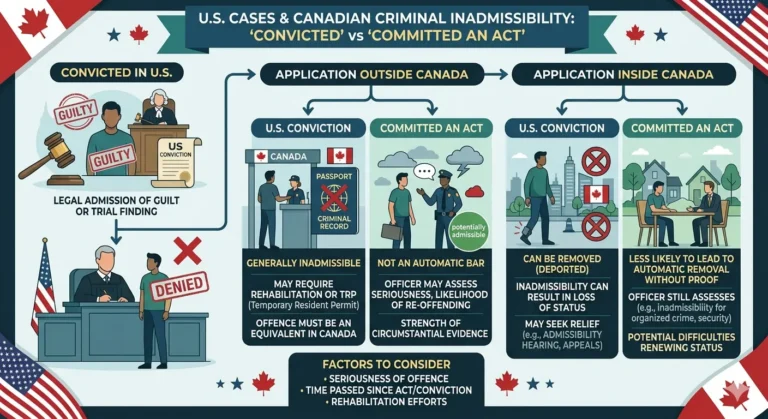
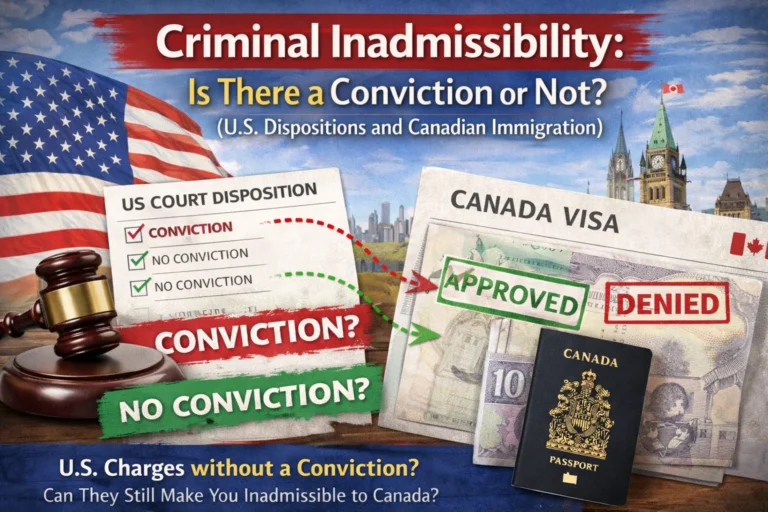
have a U.S. conviction and you plan to visit, apply to study, work,
or immigrate to Canada, an officer may assess criminal
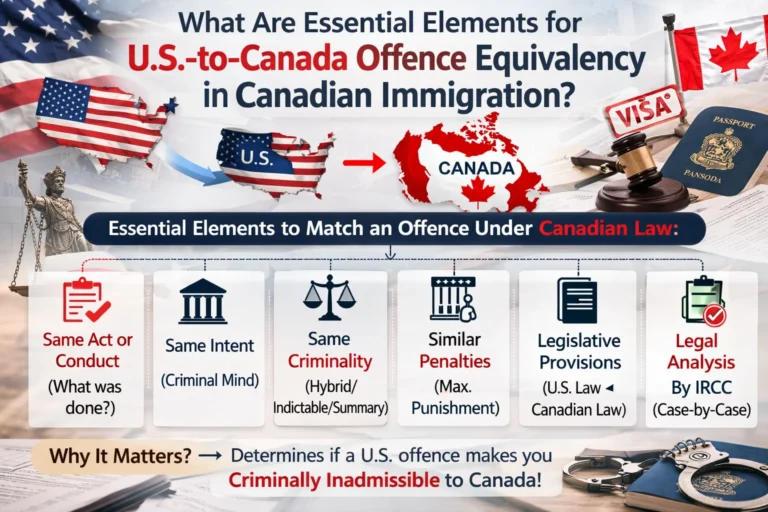
inadmissibility under IRPA s. 36 after doing criminal equivalency.
Source: IRPA
s. 36
1) Canada’s
vandalism offence: Criminal Code s. 430 (Mischief)
Canada’s
mischief offence includes wilfully:
● destroying or damaging property,
● rendering property dangerous, useless, inoperative or
ineffective, or
● obstructing, interrupting or interfering with the lawful use/enjoyment of property.
Source: Criminal
Code s. 430(1)
Why
vandalism usually fits s. 430
Even when
property isn’t “destroyed,” vandalism often counts as damage or interference (e.g., spray paint, broken locks, broken windows, tampering with equipment).
Source: Criminal
Code s. 430(1)
2)
Punishment in Canada (clear and practical)
Mischief in
Canada is commonly divided by damage value:
Mischief
over $5,000 — max 10 years (indictment)
● Over $5,000: indictable with max 10 years, or it may proceed by summary
conviction.
Source: Criminal
Code s. 430(3)
Mischief
$5,000 or less — max 2 years (indictment)
● $5,000 or less: indictable with max 2 years, or it may
proceed by summary conviction.
Source: Criminal
Code s. 430(4)
General
summary maximum (if prosecuted summarily)
Unless another
law specifies otherwise, summary conviction offences generally carry a maximum
of 2 years less a day and/or a $5,000 fine.
Source: Criminal
Code s. 787(1)
3) Why
vandalism can still create criminal inadmissibility
Even when
damage is “minor,” Canadian mischief is often hybrid (indictment or
summary). Under IRPA, hybrid offences are treated as indictable for
inadmissibility screening.
Source: IRPA
s. 36(3)(a)
What that
means in practice
● Ordinary criminality (IRPA s. 36(2)) can apply to foreign nationals if the
Canadian equivalent would be indictable (including hybrid deemed indictable).
● Serious criminality (IRPA s. 36(1)) becomes more likely when the Canadian
equivalent carries a 10-year maximum, such as mischief over $5,000.
Source: IRPA
s. 36
4) Equivalency chart: vandalism statutes in the three
states → Canada
State | Common
vandalism / property damage offence | What it
covers (plain language) | Typical
Canadian equivalent |
California | Penal Code
§ 594 (vandalism) | Defacing with
graffiti; damaging/destroying property | Criminal
Code s. 430 |
New York | Penal Law §
145.00 (criminal mischief
4th) | Intentionally
damaging property of another | Criminal
Code s. 430 |
Minnesota | Stat. §
609.595 (damage to
property) | Intentionally
damaging property without consent | Criminal
Code s. 430 |
Sources:
● CA PC 594
● NY PL 145.00
● MN 609.595
● Canada s.
430
5) When a
vandalism case becomes higher-risk
Vandalism tends
to raise immigration risk when the record shows:
● damage amount above $5,000,
● vandalism of high-value infrastructure or repeated
incidents, or
● facts suggesting escalation (e.g., breaking into
fenced areas, tampering with safety systems).
These facts can
change the Canadian match and the “seriousness” analysis.
Source: Criminal
Code s. 430(3)-(4)