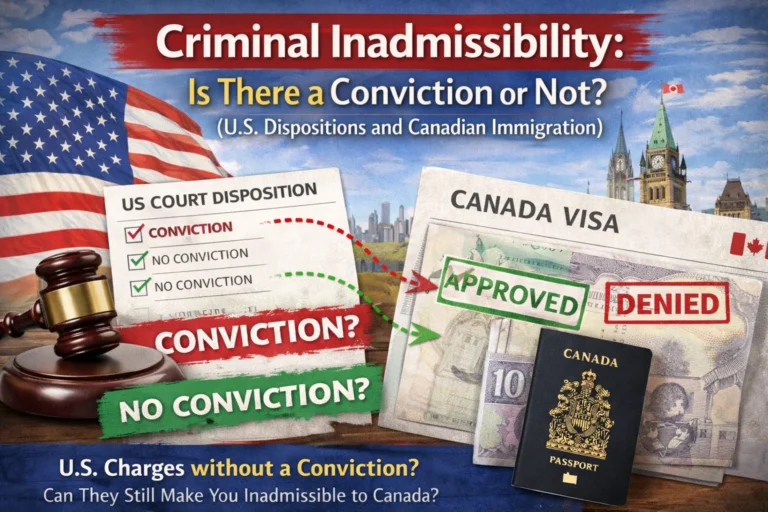
Many Americans
assume that if an offence occurred in the United States and the sentence has
already been completed, it should not affect travel to Canada. In practice,
Canadian immigration law often treats past criminal conduct differently.
Canada applies
its own legal framework when determining who may enter the country. Even if a
conviction occurred outside Canada, immigration authorities may still examine
whether the conduct would amount to a criminal offence under Canadian law. If
so, the person may be considered criminally inadmissible under section 36 of
the Immigration and Refugee Protection Act (IRPA).
Understanding
which types of offences commonly trigger this issue can help Americans plan
ahead before attempting to cross the border.
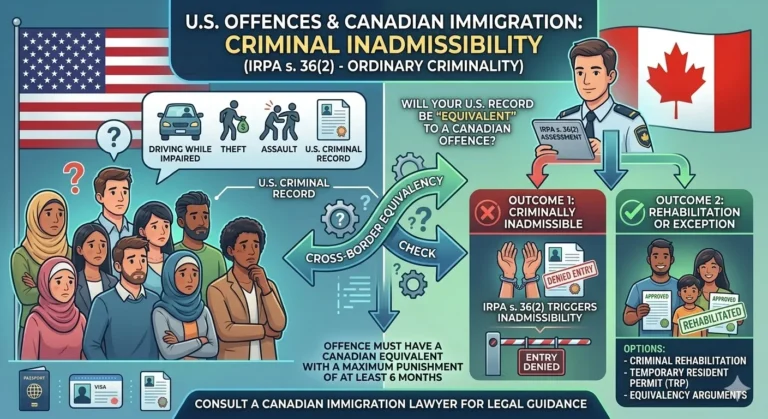
How Canada
evaluates foreign criminal convictions
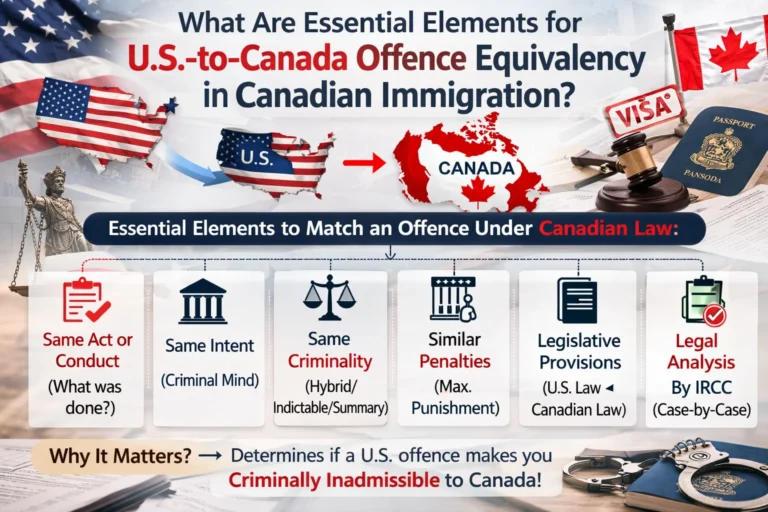
When Canadian
immigration officers assess a criminal conviction from another country, they do
not simply accept the classification used in that country’s legal system.
Instead, they
conduct what is commonly called Canadian equivalency analysis. This
involves reviewing:
● the wording of the foreign statute
● the underlying conduct involved in the offence
● the closest corresponding offence under Canadian law
Once the
Canadian equivalent is identified, immigration officials determine whether that
offence falls within serious criminality or criminality under section 36
IRPA.
Serious
criminality vs criminality under section 36
Section 36
separates criminal inadmissibility into two main categories.
Category | IRPA
provision | Applies to | Key legal
threshold |
Serious
criminality | Section 36(1) | Permanent
residents and foreign nationals | Offence
punishable in Canada by maximum sentence of at least 10 years |
Ordinary
Criminality | Section 36(2) | Foreign
nationals | Offence that
would be indictable in Canada |
For Americans
entering Canada as visitors, section 36(2) is commonly involved.
However, certain offences may still fall into the more serious category under section
36(1).
Offences
that commonly create inadmissibility issues
Several types
of criminal offences frequently appear in inadmissibility cases involving
Americans.
U.S.
offence | Likely
Canadian equivalent | Possible
immigration consequence |
DUI / DWI | Impaired
driving | Often
considered serious criminality |
Assault /
battery | Assault or
assault causing bodily harm | Criminality or
serious criminality |
Theft /
shoplifting | Theft under or
over $5,000 | Criminality |
Fraud | Fraud | Criminality or
serious criminality depending on circumstances |
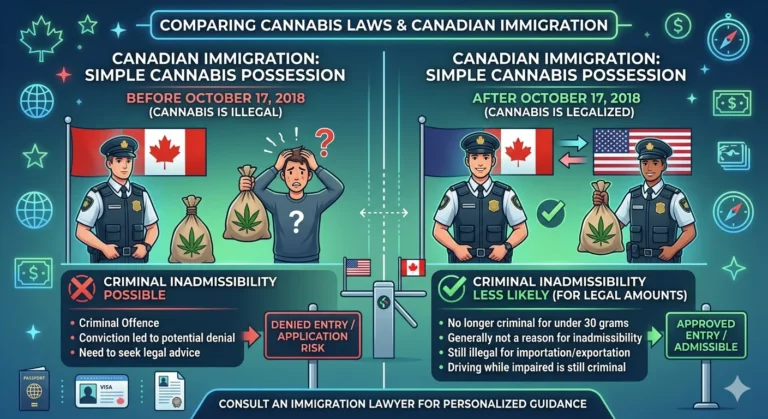
Drug
possession | Controlled
Drugs and Substances Act offence | Criminality or
serious criminality |
The exact
outcome depends on the facts of the case, the criminal statute involved, and
the Canadian equivalent offence.
Why impaired
driving cases are especially common
One of the most
frequent issues for Americans involves impaired driving offences.
Canada
significantly increased the penalties for impaired driving in 2018. As a
result, many DUI convictions can now fall within the category of serious
criminality because the maximum punishment under Canadian law exceeds ten
years.
This means that
even a single DUI conviction may create inadmissibility issues when entering
Canada.
Why minor
offences can still cause problems
Some travelers
believe that only serious crimes like violent offences will affect border
entry. However, even relatively minor offences such as shoplifting or simple
assault may create inadmissibility concerns.
The key factor
is not how serious the offence seemed at the time, but whether the conduct
corresponds to a Canadian indictable offence.
For example,
shoplifting may seem minor from a practical perspective, but theft offences can
still fall within the scope of criminality under section 36.
When older
offences may still matter
Another common
misconception is that an offence becomes irrelevant once enough time has
passed.
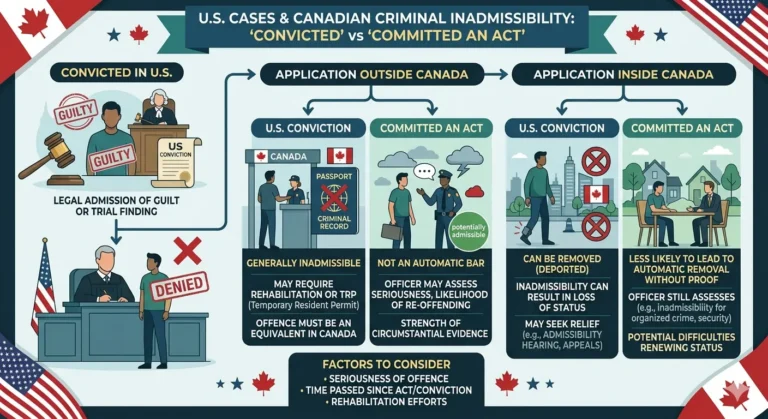
In reality, an
offence may continue to affect admissibility until the person becomes eligible
for one of the legal remedies available under Canadian immigration law, such
as:
● criminal rehabilitation
● deemed rehabilitation
● or a Temporary Resident Permit
The eligibility
rules depend on when the criminal sentence was fully completed.
Educational
purpose of this article
This article is
intended to provide general information about criminal inadmissibility for
educational purposes. Immigration law can be complex and the outcome of any
particular case depends on its specific facts.
A&M
Canadian Immigration Law Corporation, based in Winnipeg, Manitoba, assists
clients with Canadian admissibility matters, including criminal
inadmissibility. Contact us or book an appointment online for guidance.
Disclaimer
This article is
for general educational purposes only and does not constitute legal advice.
Immigration law can change and every case depends on its own facts.
Sources
Immigration
and Refugee Protection Act – Section 36
Overcome
criminal convictions – Government of Canada