A lot of
Americans are surprised to learn that a criminal record can affect whether they
are allowed into Canada. People often assume that if an offence happened in the
U.S., and the sentence is already finished, it should not matter at the border.
But that is not always how it works.
If you are
planning to come to Canada to visit, study, work, or immigrate, Canadian
border officials can look at your record and decide that you are criminally
inadmissible. In simple terms, that means Canada may refuse you entry
because of past criminal history.
The legal
framework for this is found in section 36 of the Immigration and Refugee
Protection Act (IRPA). What catches many people off guard is that Canada
applies Canadian immigration law, not American law, when deciding who
can enter.
The Types of
Offences That Commonly Raise Red Flags
Not every
charge or conviction leads to inadmissibility, but some offences come up again
and again at the border.
Common examples
include:
● DUI or DWI
● Assault
● Domestic violence-related offences
● Theft or shoplifting
● Fraud
● Drug possession or trafficking
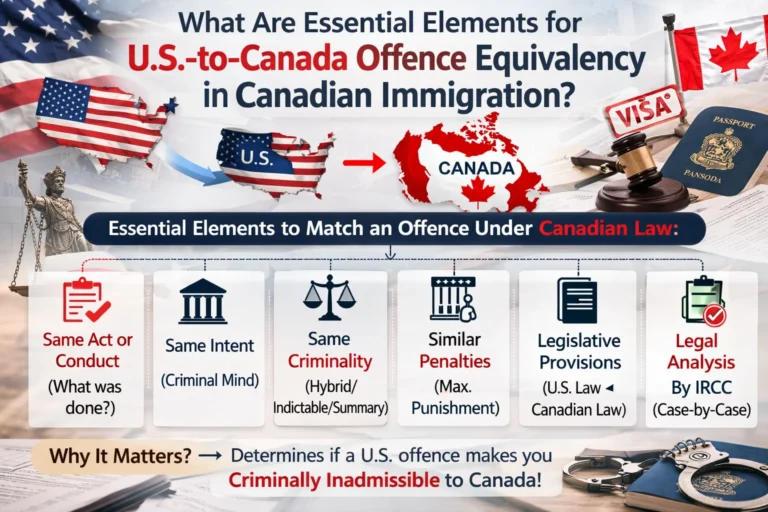
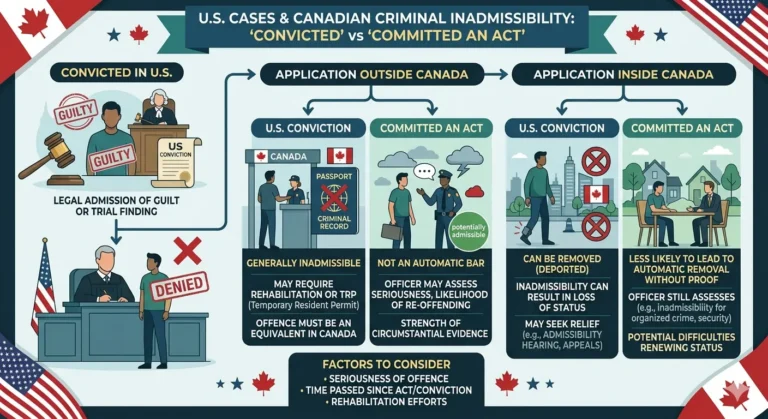
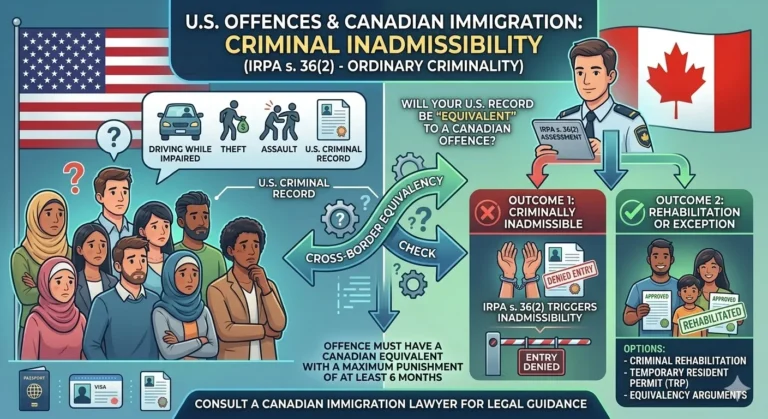
What matters is
not just the name of the offence in the United States. Canadian officials often
look at the underlying conduct and compare it to the closest offence under
Canadian law. So even something that may seem minor or old can still create
issues when you try to enter Canada.
The
Difference Between Serious Criminality and Criminality
Canadian
immigration law separates criminal inadmissibility into different categories,
and that distinction can matter a lot.
Serious
criminality usually refers
to more serious offences. In general terms, it can apply when the Canadian
equivalent offence is punishable by a maximum sentence of at least 10 years, or
when a sentence of more than six months has been imposed in Canada.
Criminality is a broader category that often applies to
foreign nationals with a conviction for an indictable offence, or in some
cases, more than one offence.
This may sound
technical, but it matters because the category can affect what options are
available and how difficult it may be to fix the problem.
What Can
Happen If You Are Found Inadmissible
If a border
officer decides that you are criminally inadmissible, the result can be
immediate and frustrating.
You might be:
● turned away at the border
● denied a visa, work permit, or study permit
● stopped from boarding plans that involve Canadian
entry in some situations
● removed from Canada if you are already inside the
country
For many
Americans, the most common scenario is simple: they arrive at the border
expecting a routine crossing and are told they cannot enter.
Ways to Deal
With Criminal Inadmissibility
The good news
is that a criminal record does not always mean Canada is permanently out of
reach.
Depending on
the facts, there may be legal options available. Two of the most common are:
Criminal
rehabilitation
This is a more permanent solution. It allows a
person to ask Canada to recognize that they have been rehabilitated and are
unlikely to commit further offences.
Temporary
Resident Permit (TRP)
This can sometimes allow someone to enter
Canada temporarily, even if they are still technically inadmissible.
Which option
makes sense depends on the offence, the sentence, how long ago everything
happened, and whether all parts of the sentence were fully completed.
Why Legal
Advice Can Make a Real Difference
This area of
law is more technical than most people expect. Two people can both say, “I had
a DUI,” but their situations may be treated very differently depending on the
exact statute, sentence, and dates involved.
A proper legal
review can help answer questions like:
● Does this offence make me inadmissible to Canada?
● What is the Canadian equivalent of the U.S. charge?
● Do I qualify for criminal rehabilitation?
● Should I apply for a Temporary Resident Permit
instead?
Getting those
answers before you travel can save a lot of stress, time, and uncertainty.
Worried
About Entering Canada With a Criminal Record?
If you have a
criminal record in the United States and want to come to Canada, it is worth
getting clear advice before making travel plans. At A&M Canadian
Immigration Law Corporation in Winnipeg, we help clients navigate admissibility
challenges, including criminal inadmissibility. Get in touch or book your
appointment online today.
Call A&M
Canadian Immigration Law Corporation: (204) 442-2786
A document
review can help determine whether your U.S. offence may create inadmissibility,
what the Canadian equivalent may be, and what options might be available to
move forward.
Sources
● Immigration and Refugee Protection Act, S.C. 2001, c.
27, s. 36
Disclaimer
(Educational Use Only)
This content is
for general educational information only and is not legal advice. Immigration
laws, regulations, and policies can change. For advice about your specific
situation, speak with a qualified immigration lawyer about whether you may be
inadmissible and what options may apply.