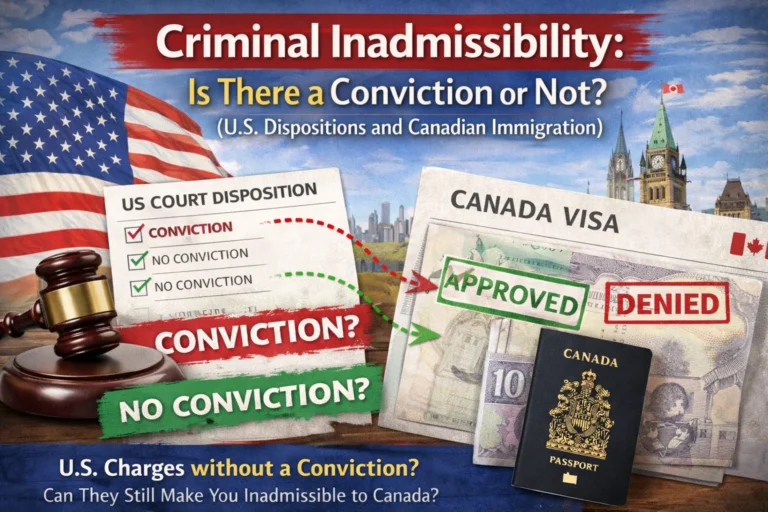
If you’re a U.S.
citizen, U.S. permanent resident (green card holder), or a U.S.
non-immigrant (for example, in the U.S. on a temporary visa) planning to
visit Canada, study, work, or immigrate, a past arrest or conviction can
trigger criminal inadmissibility under IRPA s. 36.
Source: IRPA s. 36
Why U.S.
travellers get refused
Canada can
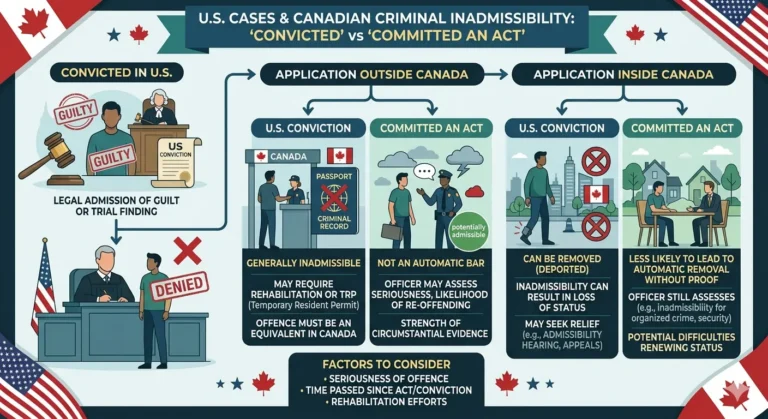
assess inadmissibility based on:
● a foreign conviction, or
● a foreign act that would be an offence in
Canada (even if it happened in the U.S.).
Source: IRPA s. 36 (foreign convictions/acts)
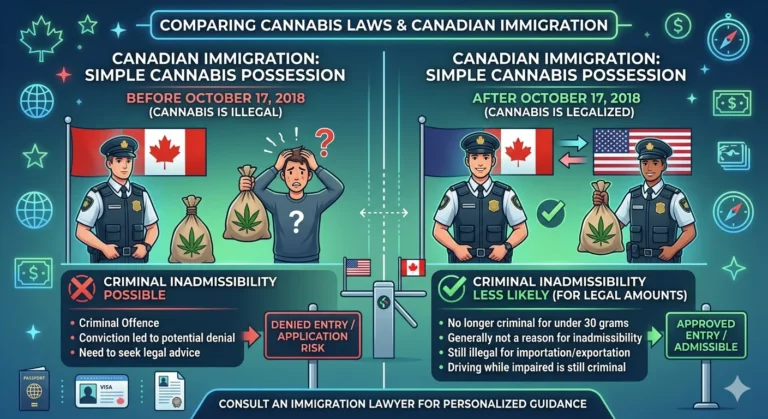
DUI / DWI
and impaired driving
A DUI/DWI
(including drugs/cannabis) is one of the most common issues for U.S.
travellers. IRCC states that if you’ve been convicted of impaired driving, you may
be inadmissible for serious criminality, whether it happened in Canada or
outside Canada.
Source: IRCC “Convicted of driving while impaired”
Impaired
driving is a Criminal Code offence in Canada (s. 320.14).
Source: Criminal Code s. 320.14
https://laws-lois.justice.gc.ca/eng/acts/C-46/section-320.14.html
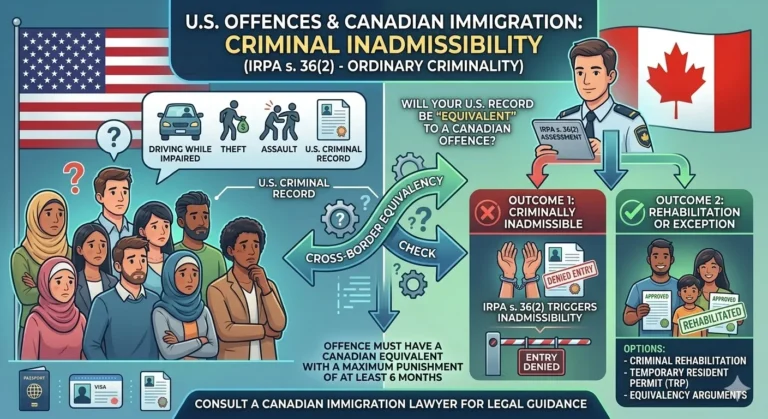
Misdemeanors,
felonies, and “hybrid” offences
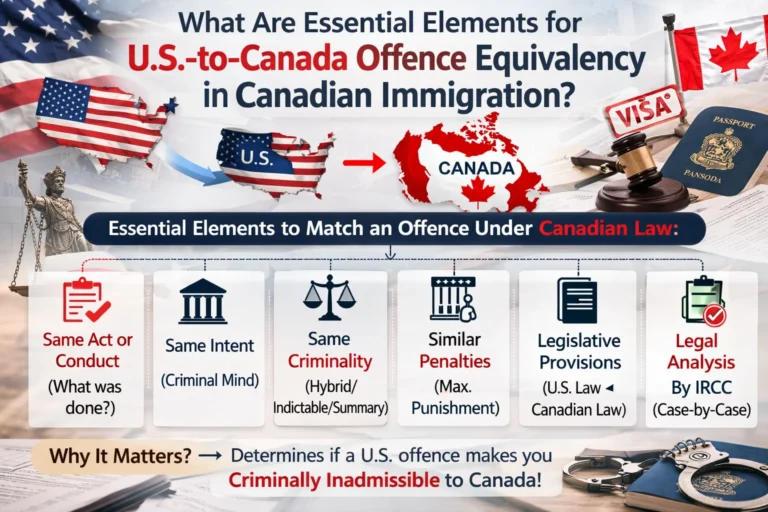
U.S.
“misdemeanor vs felony” labels don’t control the outcome. What matters is Canadian
equivalency (what the offence would be in Canada) and whether it meets
“ordinary criminality” or “serious criminality” thresholds.
Source: IRPA s. 36
A common
surprise: under IRPA, an offence that can be prosecuted summarily or by
indictment (a hybrid offence) is deemed indictable for
inadmissibility purposes.
Source: IRPA s. 36(3)(a)
Expungements
and pardons
Even if a U.S.
record is sealed/expunged, admissibility can still depend on the Canadian
legal assessment and the documents available. The safest approach is to
have the outcome reviewed with the actual court records and dispositions.
Source (framework): IRPA s. 36 equivalency/foreign
conviction analysis
Options
Depending on
your history and timing, options may include:
● Criminal rehabilitation (to overcome inadmissibility in eligible cases).
Source: IRCC Guide 5312 (Rehabilitation)
FAQs
I’m applying
for a Canadian study permit—can my U.S. criminal history prevent approval?
Yes. A U.S.
conviction can lead to inadmissibility if the offence would be criminal in
Canada and meets IRPA s. 36 thresholds.
Source: IRPA s. 36
I’m only
driving to Canada for a weekend—can I still be refused at the border?
Yes. Visitors
are assessed for admissibility on entry, even for short trips.
Source: IRPA s. 36
I have a DUI
from the U.S.—is that a problem for Canada?
It can be. IRCC
specifically warns impaired driving convictions may result in inadmissibility
for serious criminality.
Source: IRCC impaired driving page
Call A&M
Canadian Immigration Law Corporation: (204) 442-2786
Been refused at the border or worried about a U.S. record affecting travel,
a study permit, a work permit, or immigration? A Canadian equivalency review
can change the outcome. A&M has 7 years of practice and is
widely trusted in Winnipeg and Manitoba. Contact Dr. Muhammad Abrar,
Principal Lawyer, for a detailed assessment.