If you’re
planning to visit Canada, apply for a study permit, work
permit, or immigrate as a new permanent resident, a past charge or
conviction—especially from outside Canada—can lead to refusal for criminal
inadmissibility under IRPA s. 36.
Source:
IRPA s. 36
Who this
affects
● Visitors (tourism, family visits, business travel)
● Students (study permits)
● Temporary workers (work permits)
● New immigrants / PR applicants (admissibility assessed before landing)
Source:
IRPA s. 36
Serious
criminality (IRPA s. 36(1))
This can apply
to foreign nationals and permanent residents. You may be inadmissible
if:
● you were convicted in Canada of an offence with a maximum
penalty of 10+ years, or
● you were convicted in Canada and received a term
of imprisonment of more than 6 months, or
● you have a foreign conviction or act that
would match a Canadian offence with a 10+ year maximum.
Source:
IRPA s. 36(1)
Why it
matters: serious criminality
can restrict IAD appeal rights in certain situations under IRPA s. 64.
Source:
IRPA s. 64
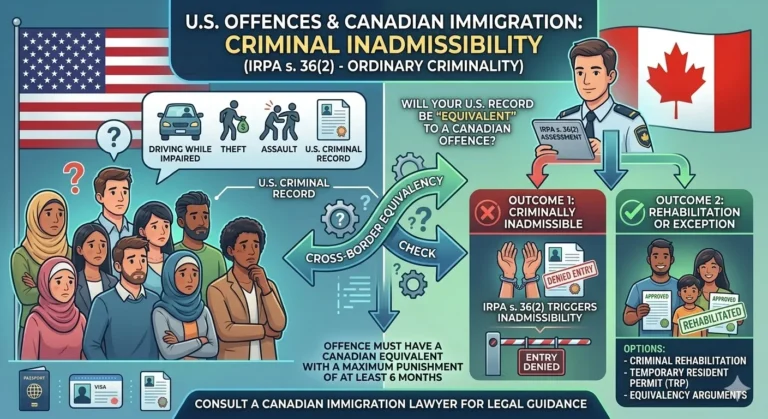
Ordinary
criminality (IRPA s. 36(2))
This applies to foreign nationals (including most visitors, students, and workers). You
may be inadmissible if:
● the Canadian-equivalent offence is indictable,
or
● you have two offences from separate incidents.
A common
surprise: offences that can proceed summarily or by indictment (“hybrid”
offences) are treated as indictable for inadmissibility purposes.
Source:
IRPA s. 36(2) (hybrid deeming rule)
Foreign
convictions & Canadian equivalency
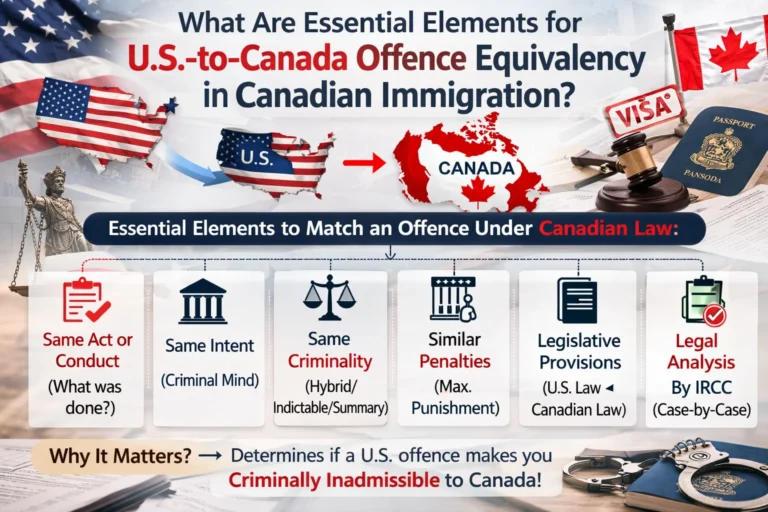
If your
criminal history is from your home country, Canada looks at equivalency—what
the offence would be in Canada and what the Canadian maximum penalty is. The
offence name alone isn’t enough; the legal elements and court documents matter.
Source:
IRPA s. 36
FAQs
What if I’m
applying for a study permit—can a home-country criminal record stop me?
Yes. A foreign
conviction (or sometimes a foreign act) can result in inadmissibility if it
would be an offence in Canada and meets the thresholds in IRPA s. 36.
Source:
IRPA s. 36
What if I’m
only visiting Canada for a short trip—can I still be refused?
Yes. Visitors
are assessed for admissibility. If an officer concludes you are criminally
inadmissible, you may be refused entry even for a short visit.
Source:
IRPA s. 36
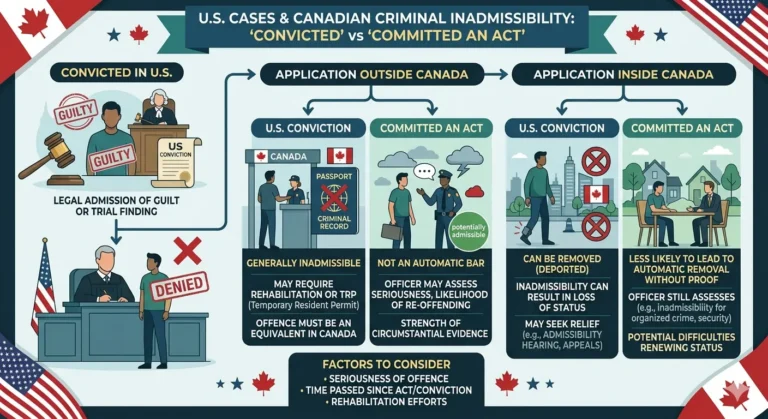
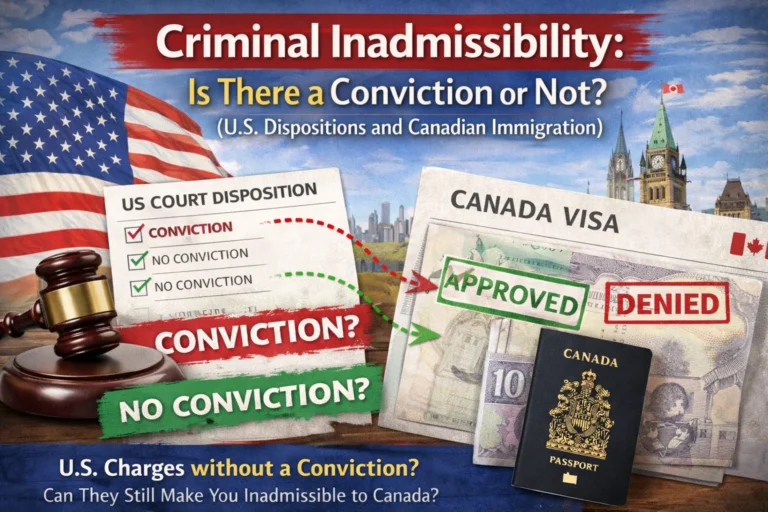
I was
charged but not convicted—does that matter?
It depends on
the outcome and the available records. IRPA includes inadmissibility based on
having “committed an act” outside Canada that is an offence where it occurred
and would be an offence in Canada.
Source:
IRPA s. 36(1)(c) and 36(2)(c)
Are there
any options if I’m inadmissible?
In some cases, criminal
rehabilitation may apply, and timing can matter.
Source:
IRCC Guide 5312 (Rehabilitation)
Concerned about
admissibility? Been turned away at the Canadian border?
Many people are
surprised to learn that a past criminal record can lead to refusal of entry or
an immigration application due to criminal inadmissibility under IRPA.
If you think you—or someone you know—may be inadmissible, options may still be
available depending on the facts and documents.
Source:
IRPA s. 36
We can help.
A&M Canadian Immigration Law Corporation has 7 years of practice and is
widely trusted in Winnipeg and Manitoba. Contact Dr. Muhammad Abrar, Principal
Lawyer, for a detailed review.