For many
Americans, discovering that a past conviction could prevent them from entering
Canada comes as a surprise. A DUI from years ago, a shoplifting charge in
college, or another minor offence may feel like something that belongs in the
past. However, under Canadian immigration law, even older convictions can
affect whether someone is allowed to enter the country.
The good news
is that, in some situations, individuals may no longer be considered
inadmissible because enough time has passed. This concept is called deemed
rehabilitation.
If you are an
American citizen or U.S. resident with a past offence, understanding deemed
rehabilitation can help you determine whether you may already be eligible to
travel to Canada again.
What Is
Deemed Rehabilitation?
Deemed
rehabilitation is a legal
concept in Canadian immigration law where a person is automatically considered
rehabilitated after a certain amount of time has passed since the completion of
their sentence.
Unlike other
immigration remedies, you do not need to submit a formal application for
deemed rehabilitation. Instead, if you meet the requirements, a Canadian border
officer may determine that you are rehabilitated when you arrive at the border.
The rules for
deemed rehabilitation are outlined under Canada’s Immigration and Refugee
Protection Act (IRPA) and related immigration regulations.
Source: Immigration
and Refugee Protection Act
Who Can
Qualify for Deemed Rehabilitation?
Deemed
rehabilitation is generally available to foreign nationals with only one
relatively minor offence.
Americans may
be considered deemed rehabilitated if:
● Only one offence was committed
● The offence is not considered serious criminality
in Canada
● At least 10 years have passed since the entire sentence was completed
● There are no additional criminal convictions
The sentence
completion date is very important. The clock does not start when the
offence occurred — it starts when the sentence is fully finished.
A sentence can
include:
● Jail time
● Probation
● Fines
● Restitution or surcharges
● Driving suspensions connected to the offence
The sentence
must be completely finished before the 10-year period begins.
Source: Government
of Canada – Deemed Rehabilitation
Examples of
Offences That May Qualify
Some offences
that Americans commonly ask about include:
● DUI or DWI (older cases)
● Shoplifting
● Theft under a certain amount
● Minor assault
● Possession of a controlled substance
● Mischief or property damage
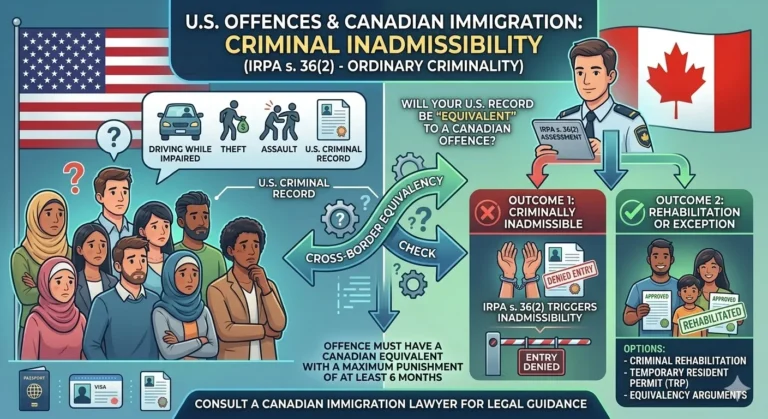
However, the
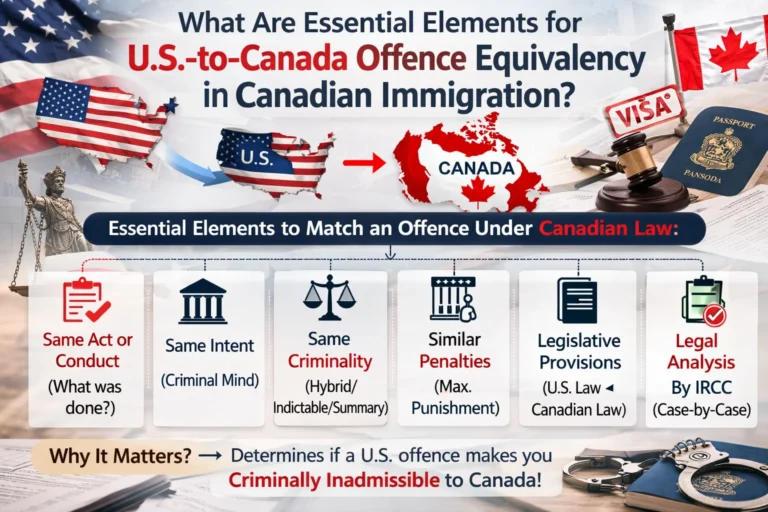
key issue is how Canada classifies the offence under Canadian law.
Even if
something seems minor in the United States, Canadian authorities will determine
the equivalent offence under Canadian law before deciding whether deemed
rehabilitation may apply.
Source: Government
of Canada – Criminal Inadmissibility
When Deemed
Rehabilitation Does NOT Apply
Deemed
rehabilitation is not available in every situation.
You may not
qualify if:
● The offence is considered serious criminality under Canadian law
● You have multiple convictions
● Less than 10 years have passed since
completing the sentence
● The offence involved serious violence or organized
crime
For example,
serious criminal offences that carry a maximum penalty of 10 years or more
in Canada may not qualify for deemed rehabilitation.
Source: IRPA
Section 36 – Criminal Inadmissibility
What Happens
at the Border?
Even if you
believe you qualify for deemed rehabilitation, the final decision is typically
made by a Canada Border Services Agency (CBSA) officer at the port of
entry.
Officers may
review:
● Court documents
● The nature of the offence
● Proof the sentence was completed
● How much time has passed
● Whether there are additional offences
For this
reason, travelers should carry complete court records and proof of sentence
completion when attempting to enter Canada.
What If You
Are Not Yet Eligible?
If you are not
yet eligible for deemed rehabilitation, there may still be other options.
These may
include:
Temporary
Resident Permit (TRP)
A Temporary
Resident Permit may allow someone who is inadmissible to enter Canada
temporarily for a specific purpose, such as business travel, tourism, or family
events.
Source:
Temporary Resident Permit – Government
of Canada
https://www.canada.ca/en/immigration-refugees-citizenship/services/visit-canada/permit.html
Criminal
Rehabilitation Application
If at least
5 years have passed since the sentence was completed, a person may apply
for individual rehabilitation, which permanently resolves criminal
inadmissibility if approved.
Source: Application
for Rehabilitation
Why
Americans Should Check Before Traveling
Many travelers
assume that an old offence will not matter anymore. Unfortunately, it is not
uncommon for Americans to discover the issue only after arriving at the
Canadian border.
By that point,
travel plans, flights, and hotel reservations may already be in place.
Reviewing your
situation before traveling can help determine:
● Whether you may qualify for deemed rehabilitation
● Whether the 10-year period has actually passed
● Whether another option like a TRP or rehabilitation
application may be necessary
How A&M
Canadian Immigration Law Corporation Can Help
At A&M
Canadian Immigration Law Corporation in Winnipeg, we regularly help
Americans and U.S. residents determine whether a past offence may affect their
ability to enter Canada.
This can
include reviewing:
● U.S. criminal records
● Canadian legal equivalency of the offence
● Sentence completion dates
● Eligibility for deemed rehabilitation
● Options such as Temporary Resident Permits or
criminal rehabilitation
Sometimes
individuals are already eligible for deemed rehabilitation and simply need to
confirm it before traveling. Facing inadmissibility issues? A&M Canadian
Immigration Law Corporation in Winnipeg can help. Contact us now or book your
appointment online.
Disclaimer
This article is
provided for general educational information only and does not constitute legal
advice. Immigration laws and policies may change, and each case depends on its
specific facts. For advice about your particular situation, consult a qualified
immigration lawyer.