When
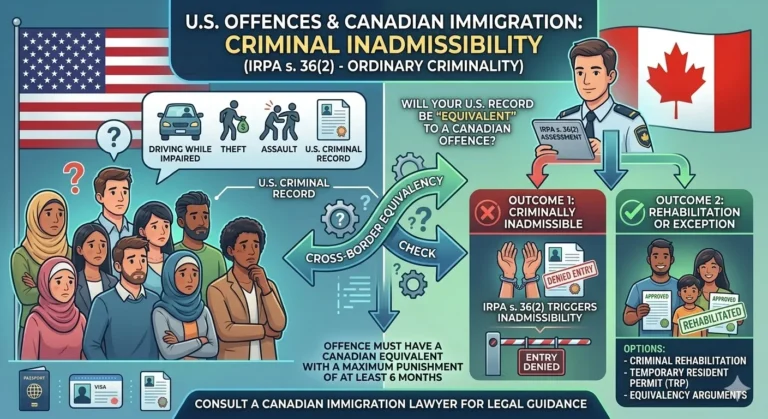
immigration officers say that conduct outside Canada would amount to a crime in
Canada, they cannot just point to a Canadian offence and leave it there. They
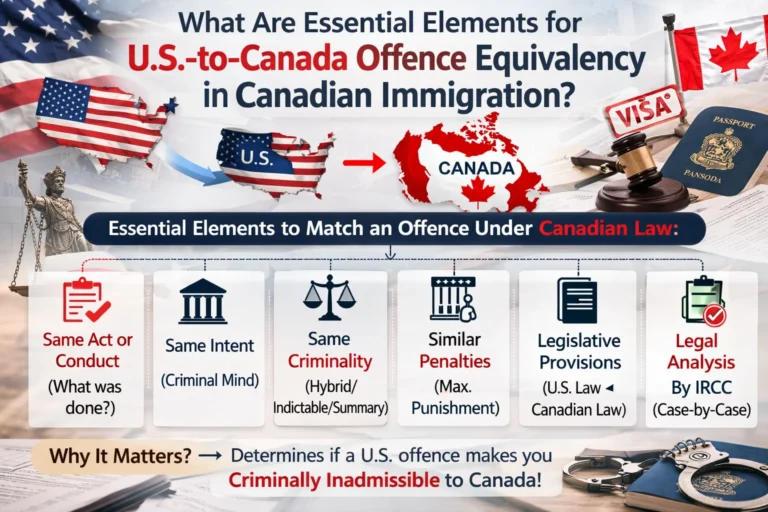
have to explain why the foreign conduct actually matches the legal ingredients
of the Canadian offence.
That is the
central lesson from Farenas v Canada (Citizenship and Immigration), 2011
FC 660.
This case is
important because it shows two things very clearly. First, criminal
inadmissibility findings based on conduct outside Canada require a real equivalency
analysis. Second, officers are generally not required to raise
humanitarian and compassionate relief on their own if the applicant did not
clearly ask for it.
What
happened in Farenas?
Linda Escanilla
Farenas applied for permanent residence in Canada under the live-in
caregiver class. She included both her husband and son in her application.
Problems arose
when immigration authorities concluded that she may be inadmissible because of
events in the Philippines involving:
● a later birth registration for her son that listed a
different father than an earlier registration,
● a possible bigamy issue involving her second
marriage,
● and alleged false information connected to her
marriage documentation.
The officer
believed this conduct could amount in Canada to offences such as:
● causing false information to be inserted into a birth
register,
● bigamy, and
● perjury.
The officer
also considered possible misrepresentation under section 40 of the Immigration
and Refugee Protection Act.
What was Ms.
Farenas’ explanation?
Ms. Farenas
gave a detailed explanation.
She said that
while working in Saudi Arabia, she met a man who identified himself as Roger
Buenaventura. She became pregnant, returned to the Philippines, and married
him in 1993. Shortly after the marriage, he disappeared. She later came to
believe that the person she married had used a false identity and that “Roger
Buenaventura,” as he had presented himself, did not actually exist.
Years later,
she met her current husband, Redante Garcia. She believed her first marriage
was invalid because of the fraud surrounding the first husband’s identity. She
then married Mr. Garcia without first having the earlier marriage formally
annulled or declared void. Later, she also arranged a re-registration of her
son’s birth showing Mr. Garcia as the father, because he had been raising the
child as his own.
The officer was
not persuaded by that explanation and found her inadmissible.
What did the
Court focus on?
The Federal
Court focused mainly on whether the officer had done a proper equivalency
analysis.
That mattered
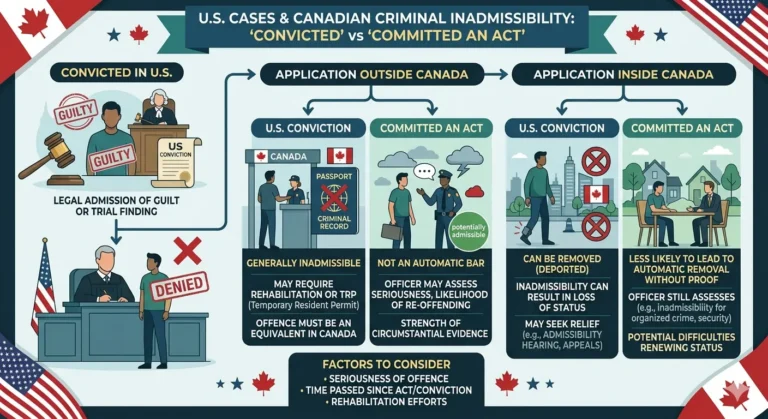
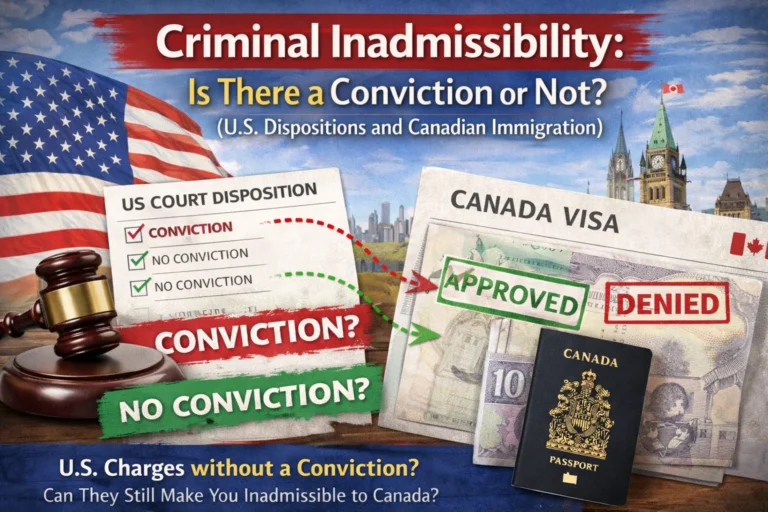
because this was not a case involving a straightforward foreign conviction that
could simply be carried over. Instead, the officer was saying that Ms. Farenas
had committed acts outside Canada that, if committed in Canada, would amount to
Canadian criminal offences.
Justice Near
made it clear that where the government relies on that kind of reasoning, the
officer must provide a critical analysis showing how the conduct matches
the Canadian offences being relied on.
What this
case teaches us
1.
Equivalency analysis has to be real, not superficial
This is the
main lesson from Farenas.
The Court found
that the officer had not done enough to justify the finding that the
applicant’s conduct would amount in Canada to offences such as bigamy or
perjury.
It was not
enough to say that the conduct looked similar. The officer had to explain why
the facts actually met the essential legal elements of the Canadian
offence.
Justice Near
emphasized that in the absence of a conviction, the officer had to look at the
facts, determine whether there were reasonable grounds to believe the applicant
committed the alleged act abroad, and then explain how that same act would
constitute a crime in Canada.
That
explanation was missing.
2. Intent
matters — especially in offences like bigamy and perjury
This was
especially important in relation to the alleged bigamy.
Ms. Farenas
argued that she believed her first marriage was invalid because the person she
married had used a false identity. In other words, she said she did not believe
she was still legally married when she entered into the second marriage.
The Court found
that this mattered because mens rea, or the required mental element, is
important in bigamy. The officer’s reasons did not meaningfully deal with her
state of mind. Instead, the officer treated the issue too mechanically, almost
as if bigamy were a strict-liability offence.
Justice Near
pointed out that both Canadian and Filipino law require intent for a bigamy
finding, and that the officer had failed to properly consider whether Ms.
Farenas had the required mental element.
So one of the
big takeaways from Farenas is this:
where intent
matters in the Canadian offence, the officer has to grapple with intent.
That includes
possible defences such as mistake of fact.
3. Troubling
facts do not excuse a weak legal analysis
The Court did
not say the facts were harmless or insignificant.
In fact,
Justice Near specifically noted that the alleged misrepresentations regarding
the marriage and the father of the child were troubling and could raise issues
under the duty of candour required by immigration law.
But even so,
the Court held that troubling facts do not excuse a deficient
equivalency analysis.
That is an
important point. An officer cannot skip the legal analysis just because the
factual background makes the applicant look unsympathetic.
4. Officers
do not have to raise H&C relief on their own
The second
major lesson from Farenas involves humanitarian and compassionate
relief.
Ms. Farenas
argued that the officer should have considered H&C factors, even though she
had not expressly made an H&C application. She said her response letter was
effectively a plea for H&C consideration.
The Court
rejected that argument.
Justice Near
held that an officer is not required to put an applicant forward for
H&C relief on the officer’s own initiative. While an officer may do so in
some cases, the law does not require it. If the applicant wants H&C
consideration, that relief should generally be clearly requested.
That part of Farenas is still cited regularly for the proposition that a vague plea for compassion
is usually not enough.
5. Clear
reasoning still matters
At its core, Farenas is a reminder that immigration decisions must still be justified with proper
reasoning.
Where criminal
inadmissibility is based on foreign conduct, the officer’s reasons have to
show:
● what the relevant foreign conduct was,
● what Canadian offence is being relied on,
● what the essential elements of that offence are,
● and why the facts actually satisfy those elements.
The Court found
that this had not happened in Ms. Farenas’ case.
What was the
result?
The application
for judicial review was allowed.
The Court sent
the matter back for redetermination because the officer had failed to provide
sufficient reasons and had not done an adequate equivalency analysis.
The Court did not hold that Ms. Farenas was necessarily admissible. It held that the
inadmissibility finding could not stand on the reasoning that had been given.
Why this
case still matters
Farenas still matters because it sits at the
intersection of criminal inadmissibility and legal reasoning.
It is a
reminder that:
● foreign conduct has to be analyzed carefully before
being treated as a Canadian crime,
● intent and possible defences cannot be ignored,
● and H&C relief usually has to be clearly
requested rather than assumed.
For applicants
facing inadmissibility based on conduct outside Canada, those are important
points.
If you or a
family member are dealing with criminal inadmissibility based on conduct
outside Canada, it may be worth reviewing by experts like A&M Canadian
Immigration Law Corporation the legal analysis carefully before moving forward.
Source
Farenas
v Canada (Citizenship and Immigration), 2011 FC 660