For many
Americans, Canada feels like the easiest international trip in the world. You
can drive across the border, take a short flight, or visit for business,
vacation, or family reasons.
But if you have
a criminal record in the United States, even something that happened
years ago can affect whether you are allowed to enter Canada.
Many travelers
only discover this when they arrive at the border and are told they may be criminally
inadmissible. The good news is that having a criminal record does not
automatically mean you will never be allowed to visit Canada. In many
situations, there are legal ways to overcome criminal inadmissibility.
This guide
explains how the process works and what options may be available.
Why U.S.
Criminal Records Can Affect Entry to Canada
Canada applies
its own immigration laws when deciding who can enter the country. Even if a
case was resolved in the United States, Canadian border officers may still
review the underlying offence.
Under section
36 of the Immigration and Refugee Protection Act (IRPA), a person may be
inadmissible to Canada if they:
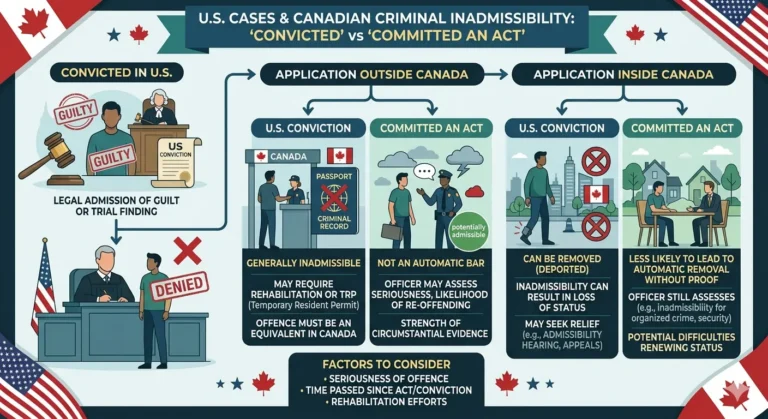
● were convicted of a crime in Canada
● were convicted outside Canada of an offence that
would be considered a crime in Canada
● committed an act outside Canada that would be
considered an offence if it occurred in Canada
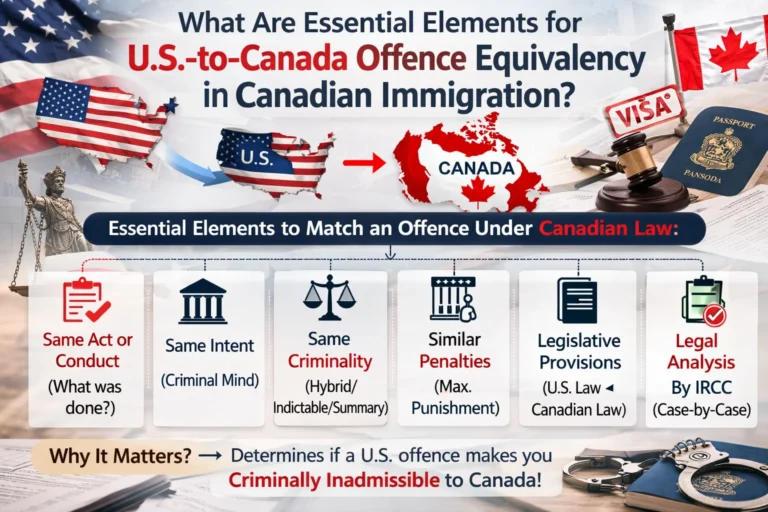
In other words,
Canada looks at the Canadian equivalent of the offence, not just how it
was treated in the United States.
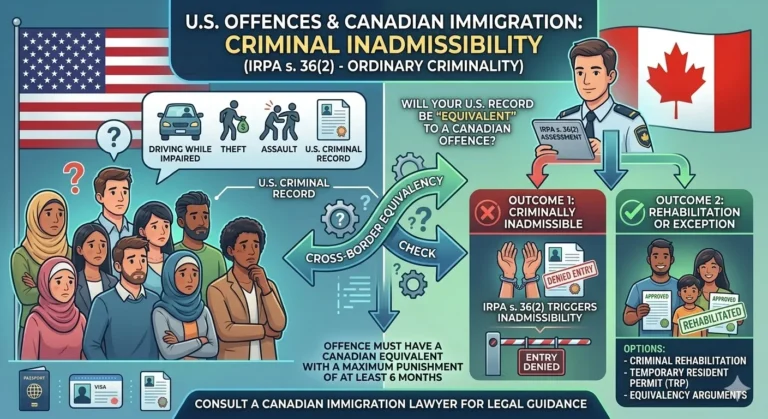
This is why
offences like DUI, assault, theft, drug possession, and fraud can
sometimes create immigration problems at the Canadian border.
Understanding
Criminality vs. Serious Criminality
Canadian
immigration law divides criminal inadmissibility into two main categories.
Criminality
Foreign
nationals, including U.S. citizens, may be inadmissible for criminality if they
have been convicted of:
● an indictable offence in Canada, or
● two offences that did not arise from a single event
Because many
Canadian offences are classified as hybrid offences, they are treated as
indictable offences for immigration purposes.
Serious
Criminality
Serious
criminality applies when the offence is considered more severe. This may occur
if:
● the offence carries a maximum possible sentence of 10
years or more, or
● a person was sentenced to more than six months of
imprisonment in Canada
The category of
inadmissibility can affect what options are available to overcome the issue.
Option 1:
Temporary Resident Permit (TRP)
One possible
solution is a Temporary Resident Permit, often called a TRP.
A TRP allows
someone who is otherwise inadmissible to enter Canada for a specific purpose
and limited period of time. Immigration officers will consider whether the
reason for travel outweighs the potential risk.
TRPs are
commonly used when someone needs to travel to Canada for:
● business meetings
● work-related travel
● family emergencies
● important events
A TRP does not
permanently resolve inadmissibility, but it can allow someone to enter Canada
temporarily despite a criminal record.
Option 2:
Criminal Rehabilitation
For many
Americans with older offences, Criminal Rehabilitation is the most
effective long-term solution.
This process
allows someone to formally ask the Canadian government to recognize that they
have been rehabilitated and are unlikely to commit another offence.
In most cases,
you may apply for criminal rehabilitation five years after completing your
entire sentence, including:
● probation
● fines
● restitution
● parole
If the
application is approved, the person is generally no longer considered
criminally inadmissible for that offence.
Option 3:
Deemed Rehabilitation
Some
individuals may qualify for deemed rehabilitation, which means they may
be considered rehabilitated automatically under Canadian law.
This typically
applies when:
● only one offence was committed
● the offence was not considered serious criminality
● at least 10 years have passed since the sentence was completed
However,
determining whether someone qualifies for deemed rehabilitation requires
careful analysis of the offence and the Canadian equivalent law.
Why Many
Americans Are Caught Off Guard
One of the most
common issues is that people assume their case no longer matters once it is
finished in the United States.
For example,
someone may have:
● paid a fine
● completed probation
● had charges reduced
● or finished their sentence years ago
But Canada may
still view the offence differently when determining admissibility.
This is why
travelers sometimes learn about criminal inadmissibility only after arriving
at the border.
Why It Helps
to Review Your Case Before Traveling
Criminal
inadmissibility often depends on details such as:
● the exact U.S. statute involved
● the sentence imposed
● when the sentence was completed
● the Canadian equivalent of the offence
Two people may
both say they had a DUI or a theft conviction, but their immigration outcomes
may still be completely different depending on the facts of the case.
A proper legal
review can help determine whether you may be inadmissible and what options may
be available before you travel.
If you are an
American planning to visit Canada and have a criminal record or past charge,
A&M’s expert review may be helpful to review your situation before
attempting to cross the border.
If you are
relying on timing rules such as the 5-year or 10-year rehabilitation periods,
a document review can confirm:
- the correct Canadian legal equivalent of the
offence
- whether your eligibility period has
actually started or been completed
Sources
Disclaimer
(Educational Use Only)
This content is
for general educational information only and is not legal advice. Immigration
laws, regulations, and policies can change. For a detailed admissibility
analysis, speak with a qualified immigration lawyer about whether you (or
someone you know) may be inadmissible and what options apply.