Can US
Citizens or Non-Immigrants Enter Canada If Charges Were Dropped?
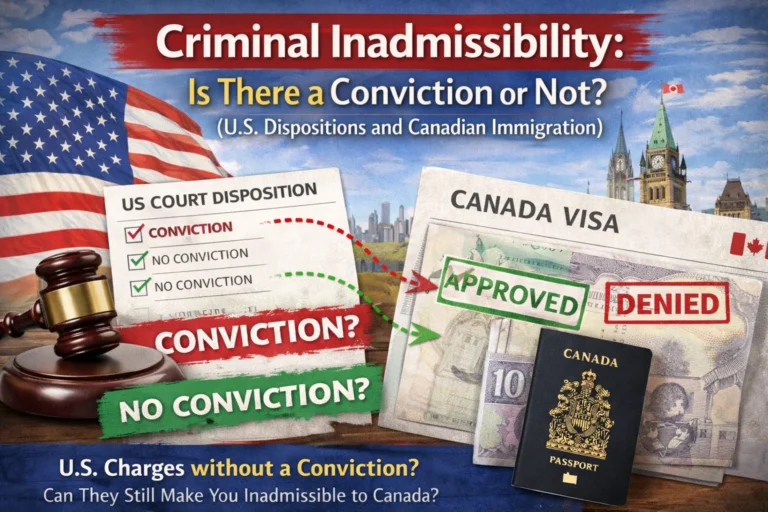
Many Americans
assume that if criminal charges were dropped or dismissed, the matter will not
affect travel to Canada.
In many
situations, that assumption is correct. However, Canadian immigration law
sometimes looks at past conduct differently than people expect.
Even when
charges were dismissed in the United States, border officers may still review
the circumstances to determine whether criminal inadmissibility could apply.
Understanding
how this works can help avoid surprises at the border.
Why dropped
charges can still raise questions
Canadian
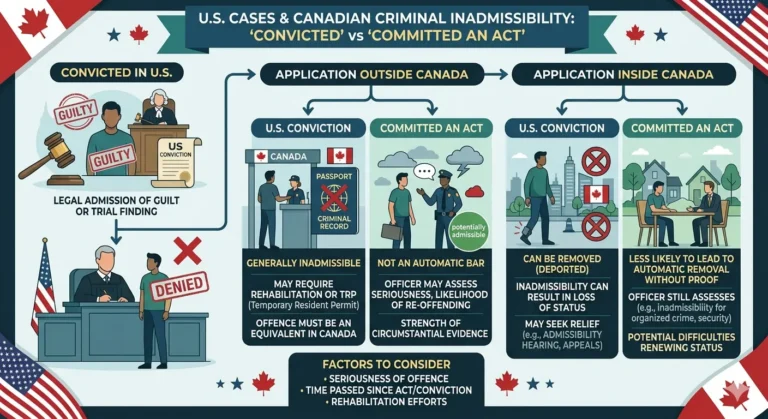
immigration law does not rely solely on criminal convictions.
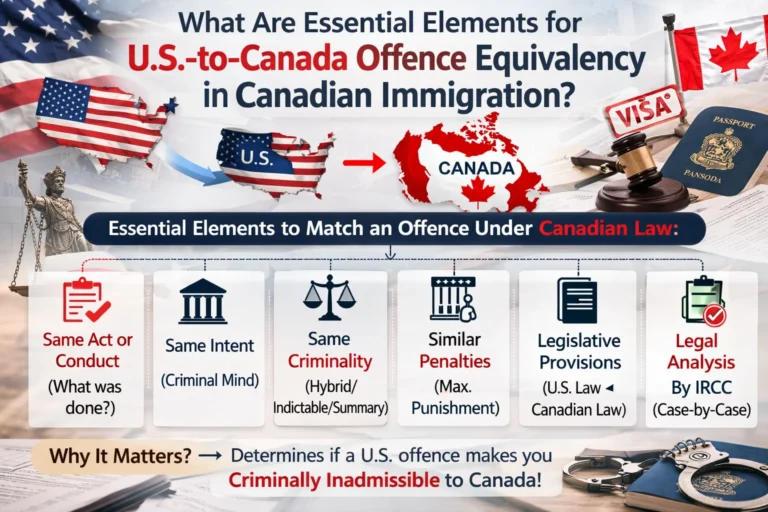
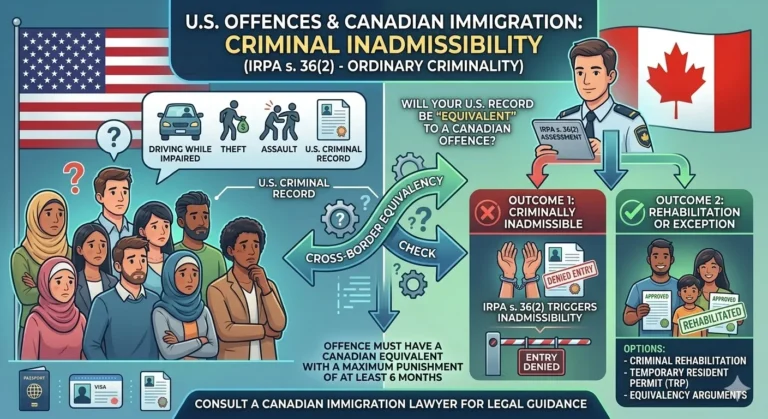
Under section
36 of the Immigration and Refugee Protection Act, a person may be
inadmissible not only for a conviction, but also for committing an act
outside Canada that would be considered a criminal offence in Canada.
This means
immigration officers may sometimes look beyond the outcome of a court case and
consider the underlying conduct.
However, the
legal standard used in immigration decisions is different from the criminal law
standard used in courts.
The
immigration standard of proof
In criminal
courts, a conviction usually requires proof beyond a reasonable doubt.
Immigration law
uses a different standard. Officers may make certain determinations based on reasonable
grounds to believe that a person committed an act that would constitute a
criminal offence.
This does not
mean that every dropped charge will lead to inadmissibility. In many cases,
dismissed or withdrawn charges do not create any issue.
But the details
of the situation can matter.
Situations
where dropped charges usually do not cause problems
Many travelers
with dismissed charges are able to enter Canada without difficulty.
For example,
issues may be less likely to arise where:
● the case was dismissed due to lack of evidence
● the charges were withdrawn early in the process
● there was no admission of guilt
● there is no criminal record associated with the case
Each case
depends on its own facts.
When
additional questions may arise
Border officers
may ask additional questions if information about the incident appears in law
enforcement databases.
In those
situations, they may want to understand:
● what happened during the incident
● whether charges were formally dismissed
● whether the person entered a diversion program
● whether any admission of guilt was made
If the
situation is unclear, officers may ask for supporting documents.
Why
documentation can help
For Americans
who have had charges dropped in the past, it can sometimes be helpful to keep
documents showing the final outcome of the case.
These might
include:
● court disposition records
● dismissal orders
● documentation showing the charges were withdrawn
Having these
records available can help clarify the situation if questions arise during a
border inspection.
Sources
· Immigration
and Refugee Protection Act, section 36
· Immigration
and Refugee Protection Act, section 33
· Canada
Border Services Agency — Admissibility