Graffiti and Criminal Inadmissibility: Canada vs California, New York, Minnesota
A U.S. graffiti
/ vandalism conviction can still affect Canadian entry or applications.
Canadian officers typically do two steps:
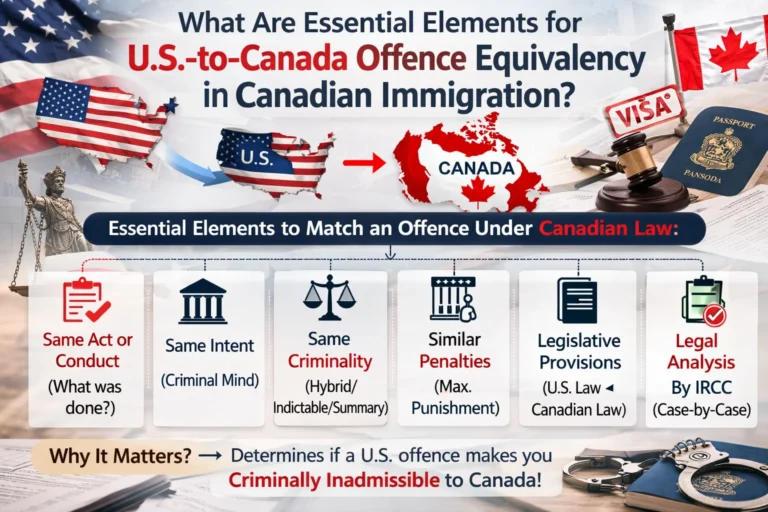
Criminal equivalency: match your U.S. offence to the closest
Canadian offence (usually mischief), then
Apply criminal inadmissibility rules under IRPA s. 36.
1) Canada’s
baseline offence for graffiti: Mischief (Criminal Code s. 430)
Graffiti is
typically assessed as “mischief” in Canada because mischief includes
wilfully destroying or damaging property—which covers defacing property
(e.g., spray paint, etching, tagging).
Punishment
matters (and it’s usually “hybrid”)
Under s. 430:
●Mischief over $5,000: indictable up to 10 years, or summary
conviction.
●Mischief $5,000 or less: indictable up to 2 years, or summary
conviction.
●General summary maximum (unless otherwise specified): 2 years less a day and/or $5,000 fine.
Why “hybrid”
matters for inadmissibility
IRPA treats hybrid
offences as indictable for inadmissibility screening. So even lower-value
graffiti (often “under $5,000”) can still trigger ordinary criminality analysis for foreign nationals.
2) Equivalency chart: California / New York / Minnesota → Canada
State
Common
graffiti / vandalism law
What it
criminalizes (plain language)
Typical
Canadian equivalent
California
Penal Code
§ 594 (Vandalism)
“Defaces with
graffiti,” damages or destroys property not one’s own
Criminal
Code s. 430 (mischief—damage/deface)
New York
Penal Law §
145.60 (Making graffiti)
Placing a mark
on property with intent to damage; unauthorized graffiti
Criminal
Code s. 430
Minnesota
Minn. Stat.
§ 609.595 (Damage to Property)
Intentionally
causing damage to another’s property without consent (tiered by
factors/amount)
Criminal
Code s. 430
3) When
graffiti can be treated as “ordinary” vs “serious” criminality
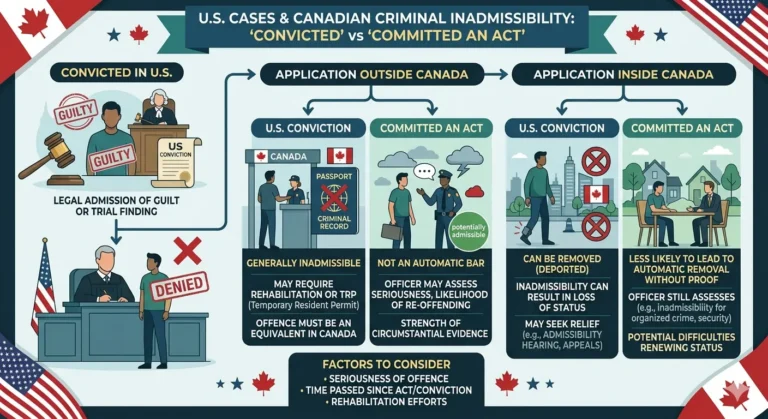
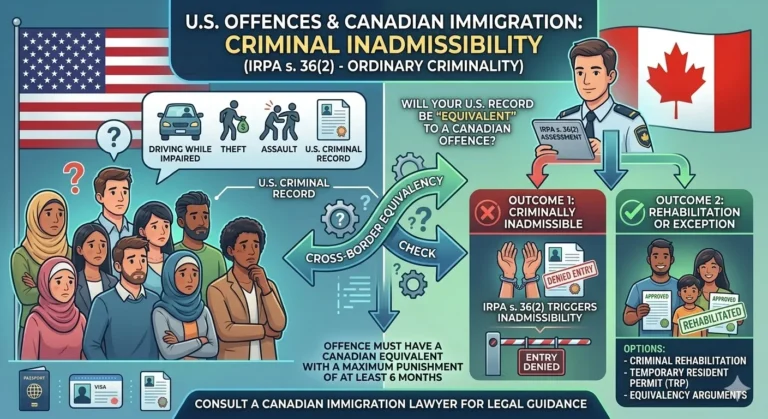
Ordinary
criminality (often the starting point for visitors/students/workers)
If the Canadian
equivalent is treated as indictable (including hybrid deemed
indictable), a foreign national may be found inadmissible under IRPA s.
36(2).
Serious
criminality (higher-risk situations)
Graffiti/vandalism
can move into a serious criminality analysis when:
●the Canadian equivalent is mischief over $5,000 (max 10 years)
●or the facts fall into other 10-year mischief
categories (e.g., certain protected-property mischief provisions)
If you need to visit,
study, work, or immigrate to Canada and you have a graffiti/vandalism
record from California, New York, or Minnesota, a document-based equivalency
review can confirm the closest Canadian match (often Criminal Code s. 430)
and how IRPA s. 36 may apply. You can contact A&M Canadian
Immigration Law Corporation for this.
Disclaimer
(Educational Use Only)
This content is
for general educational and informational purposes only and is not legal
advice. Immigration laws, regulations, policies, and officer practices can
change. U.S. graffiti/vandalism laws vary by state (and can change over
time), and outcomes depend on the exact statute section, offence date, and
official court records.
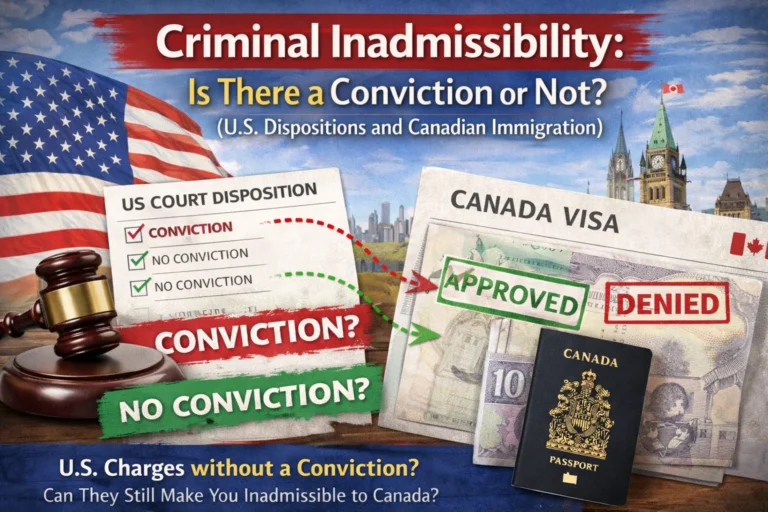
It can. Canada focuses on the Canadian
equivalent (often mischief) and IRPA’s rules, not U.S. labels like
“misdemeanor.” Hybrid offences are treated as indictable for inadmissibility
screening.
The exact statute section,
charging document, judgment/disposition, and any court findings about damage
amount or facts (because those can change the Canadian match).